

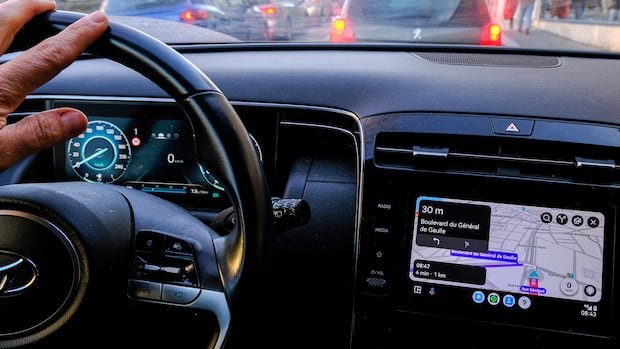

Tara McAndrew had a realization when she unexpectedly found herself near a forest in Wellington, N.Z. instead of at the rental apartment she intended to visit. She decided it was time to rely less on GPS for navigation. Over the past ten years, the travel writer from Ontario, known for her work with Travel with TMc, has traveled extensively across the globe. While she uses Waze or Google Maps for directions in unfamiliar cities, on the return journey, she prefers to navigate without technological assistance.
Research indicates that relying too heavily on GPS can negatively impact spatial memory. A study conducted at McGill University in 2020 found that habitual GPS users exhibited poorer spatial memory skills, which declined with increased GPS usage. The hippocampus, responsible for spatial memory, episodic memory, emotional regulation, and stress management, can atrophy with reduced use, potentially increasing the risk of Alzheimer’s disease.
Neuroscientist Louisa Dahmani, a co-author of the study, suggests actively engaging with one’s surroundings while using GPS for directions to prevent cognitive decline. She emphasizes the importance of navigating without technology to exercise the spatial memory muscle. Similarly, Brenda Holder, a Cree traditional knowledge keeper, teaches land-navigation skills through Mahikan Trails, emphasizing the significance of staying calm, observing natural clues, and using multiple navigational references to avoid getting lost.
Technology’s fallibility, as highlighted by McAndrew’s experience, and the potential risks of GPS signal interference have prompted a return to older navigation methods in some regions. In Europe, authorities are reintroducing pre-World War II technologies like LORAN and celestial navigation to mitigate the impact of GPS failures. McAndrew acknowledges the decline in her ability to visualize familiar locations due to GPS reliance, underscoring the benefits of starting with traditional maps to build navigational confidence.
In a world where GPS usage is prevalent, balancing technological assistance with traditional navigational methods may enhance spatial memory, cognitive skills, and connection to the surrounding environment.