

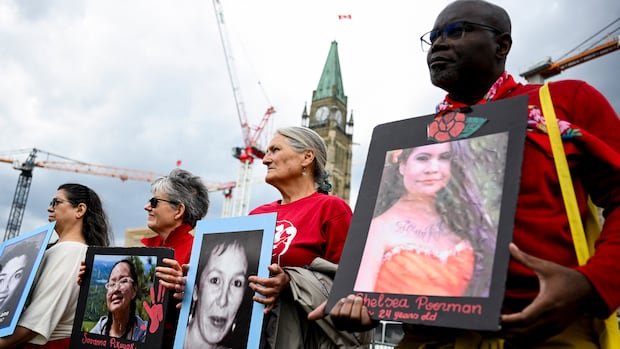

A gathering was held on Parliament Hill on Tuesday to demand increased efforts to address the ongoing crisis of missing and murdered Indigenous women, girls, and two-spirit individuals (MMIWG2S+). Bridget Tolley, the founder of Families of Sisters in Spirit, organized the event to observe the national day of awareness, known as “Red Dress Day,” inspired by Métis artist Jaime Black’s work.
During the vigil, Tolley, a member of Kitigan Zibi Anishinabeg, emphasized the urgent need for action, stating that families are seeking tangible outcomes rather than further studies, recommendations, or inquiries. Recent data from a 2022 Statistics Canada report revealed that over 60% of Indigenous women have encountered physical or sexual violence in their lifetimes.
This year marks a decade since the commencement of the National Inquiry into Missing and Murdered Indigenous Women and Girls, with seven years passed since the release of its final report. Tolley, whose mother Gladys was tragically killed in 2001 near their home in Kitigan Zibi, highlighted the prolonged quest for truth and accountability, stressing the importance of advocating for missing and murdered Indigenous women.
Tolley, alongside 400 others, signed an open letter urging government officials not to solely focus on increasing funding for national MMIWG2S+ organizations, citing the need for meaningful and sustained solutions to the crisis. National MMIWG2S+ organizations recently held a press conference calling on the federal government to provide long-term financial support.
Additionally, family members of MMIWG2S+ and local activists expressed their concerns and demands during the event. Mercedes Côté, the youth representative for the Algonquin Anishinabeg Nation Tribal Council, emphasized the necessity for prompt and serious responses when Indigenous women go missing, underscoring the profound impact these tragedies have on communities.
Côté, reflecting on the losses within her own Kitigan Zibi community, stressed the interconnectedness and shared grief experienced in close-knit Indigenous communities. She highlighted the importance of amplifying voices and fostering meaningful change to address the ongoing challenges faced by Indigenous women and their families.