

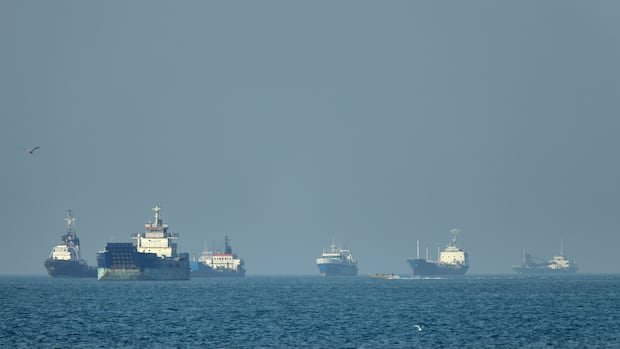

U.S. President Donald Trump has declared a temporary halt to the U.S. operation to direct stranded vessels out of the Strait of Hormuz to focus on finalizing a deal with Iran. Trump made the announcement via social media on Tuesday, stating that the pause is necessary to facilitate ongoing efforts to reach a settlement with Iran. The decision, according to Trump, was influenced by requests from Pakistan and other nations, the military achievements against Iran, and the progress made towards a comprehensive agreement with Iranian representatives. Despite the pause in Project Freedom, the U.S. blockade of Iran’s ports will continue.
Earlier on Tuesday, U.S. Secretary of State Marco Rubio emphasized that the U.S. has achieved its goals in the military campaign against Iran, even though Tehran’s enriched uranium remains unsecured. Rubio clarified that the operation to ensure safe passage for oil transit in the Strait of Hormuz is distinct from the broader military campaign. His remarks were likely aimed at addressing criticisms from Congress members who argue that Trump may have breached the War Powers Resolution by prolonging military action beyond the stipulated timeframe.
The conflict with Iran commenced with airstrikes conducted by Israel and the U.S. on February 28. Trump formally notified Congress of the conflict two days later, triggering a 60-day deadline that ended last Friday. By declaring the end of hostilities under Operation Epic Fury, the White House circumvented the requirement, a stance reinforced by Rubio. He affirmed that the military operation has concluded, shifting focus to Project Freedom.
Rubio reiterated that the U.S. is engaging solely in defensive actions to enforce the blockade of Iranian ports, responding only if attacked first. He emphasized that the operation remains defensive, with no shots fired unless provoked. Prior to the attacks by Israel and the U.S., the Strait of Hormuz was open. Only two vessels, both American-flagged, have been guided through the strait with U.S. military assistance.
In parallel developments, the United Arab Emirates reported ongoing missile and drone attacks from Iran on Tuesday, despite Washington’s assertion of a fragile ceasefire. Rubio urged Iran to acknowledge the current situation and disclosed that U.S. envoys are pursuing diplomatic resolutions, focusing on addressing any remaining nuclear material in Iran’s possession.
Rubio declined to disclose specific progress made in negotiations, highlighting that reaching a formal agreement would take time. Additionally, he downplayed tensions between Trump and Pope Leo regarding Iran, ahead of Rubio’s impending visit to the Vatican. Leo has expressed opposition to the war in Iran but not advocated for nuclear weapons, contrary to Trump’s claims. Leo emphasized the Church’s stance against nuclear arms and reiterated the importance of promoting peace and spreading the Christian message.