

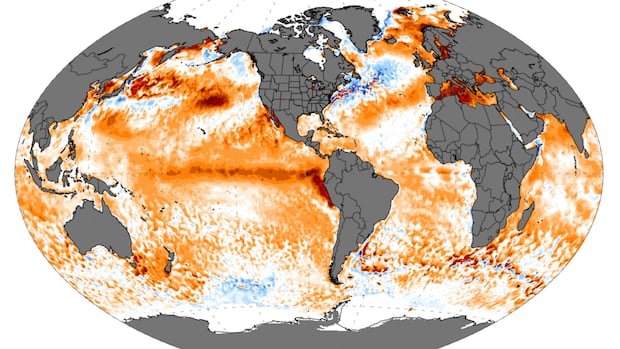

Meteorologists announced on Thursday that El Niño, a powerful climatic phenomenon, has emerged in the Pacific Ocean and is anticipated to reach unprecedented strength. This natural warming cycle is expected to exacerbate the already warming global temperatures due to fossil fuel emissions, leading to intensified extreme weather events worldwide. This upcoming El Niño event is projected to rival or surpass the record-setting occurrence in 1997 that resulted in significant economic losses from various disasters like heatwaves, floods, droughts, tornadoes, and wildfires.
The U.S. National Oceanic and Atmospheric Administration (NOAA) has officially confirmed the presence of El Niño, characterized by warming waters in the Pacific near the equator that influence weather patterns globally. NOAA’s report indicates a 63% likelihood of the current El Niño reaching historical magnitudes by late fall and early winter, potentially ranking amongst the most significant occurrences since 1950.
Climate scientist Abby Frazier from Clark University explained that the warm waters associated with El Niño play a crucial role in intensifying extreme weather events across different regions worldwide. She highlighted the rapid escalation of adverse conditions, particularly in the Pacific region. United Nations Secretary-General Antonio Guterres described El Niño as a pressing signal of climate change, emphasizing its potential to exacerbate global warming effects.
The impacts of El Niño vary across regions, with some areas experiencing benefits while others face heightened risks. While the Atlantic hurricane season may see reduced activity, the Pacific region could witness increased storm intensity. The Middle East, currently plagued by droughts, might benefit from El Niño, whereas regions like South America, India, Australia, and Northeastern Africa face elevated threats from heavy rains, heatwaves, and wildfires.
In the United States, El Niño typically leads to more intense storms with heavier rainfall in the southern regions, benefiting the agricultural sector. Moreover, regions like the northern Rockies and Southwest, experiencing snow deficits, could receive substantial summer precipitation. The effects of El Niño in the U.S. are most pronounced during winter, affecting precipitation patterns across different parts of the country.
The timing and development of El Niño significantly influence the resulting weather extremes. While these phenomena usually peak in late fall or early winter and subside in the following spring, recent indications suggest an earlier and potentially longer-lasting peak for the current El Niño event. Scientists anticipate a prolonged and intense El Niño based on the early signals observed, such as warmer surface waters in the Pacific.
Overall, the current El Niño event underscores the growing impact of climate change, with experts warning of more severe occurrences as the planet continues to warm due to human activities. While preparations are essential, it remains uncertain whether this El Niño event is directly linked to broader climate trends. The emphasis is on readiness and adaptation measures to mitigate the potential impacts of El Niño.