

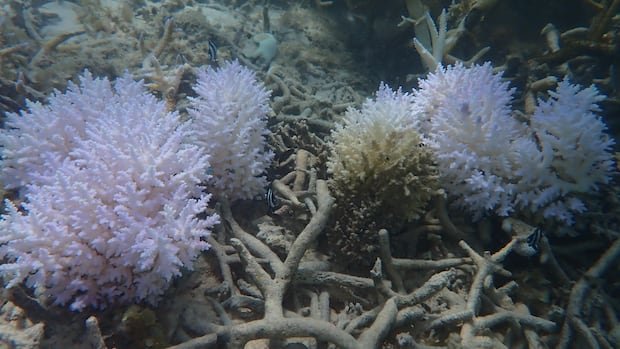

The coral reefs off the coast of Mauritius are facing a serious threat from climate change, as observed by Nadeem Nazurally during his recent snorkeling trips. The once vibrant reefs, adorned with hues of green, blue, and pink, have now lost their brilliance and appear pale and lifeless. Nazurally, an associate professor at the University of Mauritius, expressed concern over the drastic loss of color, emphasizing the importance of coral reefs as natural barriers against cyclones and vital ecosystems supporting tourism and marine life.
Mauritius, known for its rich coral diversity with nearly 250 coral species and extensive reef coverage, has experienced a significant decline in coral health. The island has lost approximately half of its coral cover since the 1970s, facing challenges such as coral bleaching events and a devastating oil spill in 2020. The western Indian Ocean region is witnessing unprecedented coral bleaching due to rising ocean temperatures driven by climate change. Experts warn that global warming exceeding 2°C above pre-industrial levels could lead to the virtual disappearance of coral reefs worldwide.
However, efforts to restore coral reefs are showing promise in Mauritius. A restoration project launched in 2019, supported by a $10 million USD grant from the Adaptation Fund, aims to restore three hectares of degraded reef by the end of the year. The project focuses on two restoration approaches: sexual and asexual reproduction methods.
Sexual reproduction, known as coral spawning, involves corals releasing eggs and sperm into the water to form new colonies. Asexual reproduction includes techniques like fragmentation, where coral fragments are grown and transplanted to restore damaged reefs. In Mauritius, over 100 coral nurseries have been established, cultivating more than 100,000 coral fragments for transplantation in the Blue Bay Marine Park.
By combining sexual and asexual methods, restoration efforts are accelerating the recovery of degraded reefs. Marie Annielle Espiegle, a restoration technician with SECORE International, highlights the importance of genetic diversity in producing resilient corals. Although asexual methods lead to faster restoration, sexual reproduction introduces new genetic material, enhancing resilience to threats like diseases.
Despite challenges, Mauritius has made significant progress in coral reef restoration, restoring over 50% of its target area. The Ministry of Fisheries is seeking an extension to complete the restoration project, confident in achieving the goal of restoring three hectares of coral reefs. Beyond ecosystem protection, the restoration work in Mauritius aims to preserve the island’s identity and cultural heritage tied to its vibrant coral reefs.