

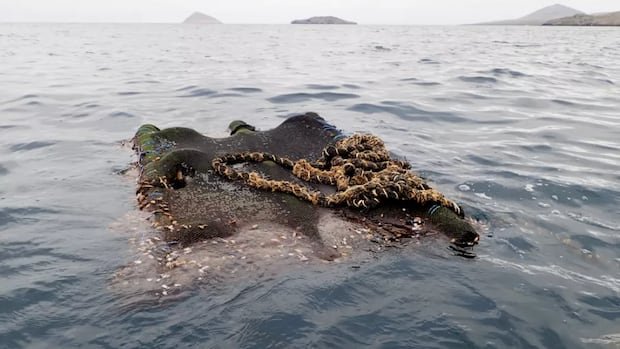

New Canadian research has revealed that abandoned fish aggregating devices (FADs) are causing harm to coral reefs and wildlife, including in marine protected areas, where these drifting rafts have intruded despite fishing bans. These FADs, crucial for catching smaller tropical tuna like skipjack, have been found in over half of the world’s marine protected zones, meant to safeguard vulnerable species.
Typically constructed from wood or bamboo with plastic components, FADs are approximately the size of a boardroom table. Historically, mesh nets were utilized beneath them to lure and slow fish, but due to entanglement risks to wildlife, a global ban on netting was enforced in 2025, with ropes as a substitute. These floating rafts attract smaller fish seeking shelter, thereby drawing in predators like tuna for efficient capture by fishing vessels.
An estimated 100,000 FADs are deployed annually, with around 90% becoming lost, leading to potential environmental hazards. When these FADs drift into protected marine areas, they can become stranded on beaches and coral reefs, causing damage and plastic pollution. The study documented over 6,000 FAD strandings in 174 protected zones, with reports of significant coral destruction and entanglement incidents involving sharks and turtles.
Efforts to mitigate FAD impact include sustainability certifications like the Marine Stewardship Council, prompting fishing companies to adopt eco-friendly practices. The International Seafood Sustainability Foundation has introduced a biodegradable “jelly FAD” design, reducing environmental harm when stranded. Recommendations such as limiting FAD deployment, avoiding potential stranding areas, and retrieval by fishing entities are proposed to address marine pollution concerns.
Improved awareness, research, and industry collaboration are essential to minimize the adverse effects of FAD fishing on marine ecosystems. Public knowledge and engagement can drive positive change, as seen in previous environmental conservation efforts within the industry.