


A First Nation community in Saskatchewan is implementing a unique approach to education that focuses on hands-on learning experiences. The Clearwater River Dene Nation, located approximately 520 kilometers north of Saskatoon, has introduced a seasonal land-based learning model to actively engage students in their studies.
Grade 11 student Landon Moise emphasized the benefits of this educational method, highlighting the opportunities it provides for interactions with scientists, participation in sampling activities, collaboration with industry professionals, and exposure to unique experiences.
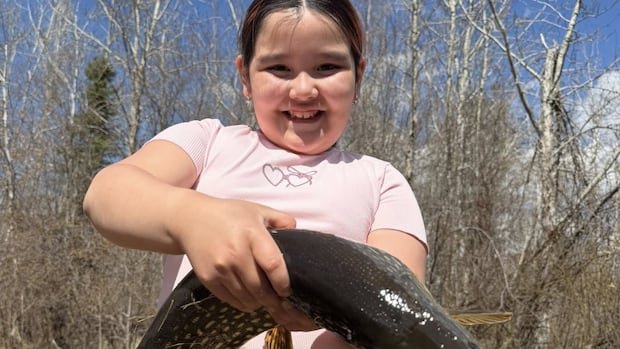
One recent learning activity involved the exploration of a traditional fishing technique known as snare fishing. Under the guidance of Paul Haynes, the school’s land-based educator, students learned to construct fishing poles using branches and wire snares. The art of spotting and catching fish in the water was emphasized, with Haynes describing the process as an art form that requires skill and practice.
Following the challenges brought about by the COVID-19 pandemic, the school had to reassess its teaching strategies to re-engage students. By transitioning to a more hands-on and experiential learning approach, attendance and student enthusiasm have significantly improved.
The school now pairs older students with younger ones to facilitate mentoring and ensure safety during outdoor activities. This collaborative approach has created a supportive learning environment that spans across different age groups, from children to elders, promoting a holistic and enriching educational experience.
In addition to teaching traditional fishing methods, the program incorporates lessons on ethical hunting and fishing practices, emphasizing the importance of conservation and respecting natural resources. Students are taught to handle fish with care and to distribute any catch among their families, reinforcing the values of sustainability and community sharing.
Elders Doreen Louise Moise and Pauline Fontaine play a crucial role in passing down traditional knowledge and skills to the younger generation. Their dedication to preserving cultural practices and seeing the joy on the students’ faces as they learn and achieve success reflects a deep commitment to ensuring the continuity of heritage and traditions.
The program’s emphasis on experiential learning, community collaboration, and cultural preservation not only enriches the educational experience but also instills valuable life skills and a sense of pride in the students. High school student Carmen Haineault shared her appreciation for the program, highlighting the importance of teaching proper fish handling and respect for nature, especially for those who may not have access to such teachings at home.