

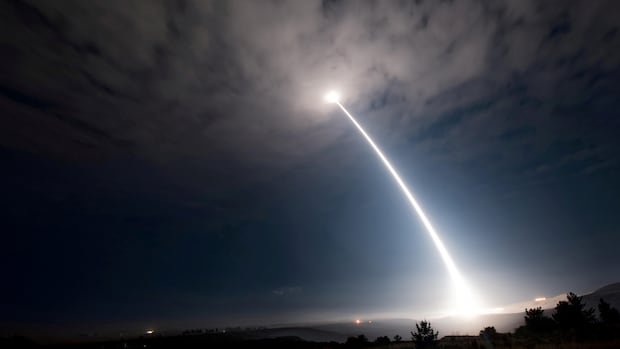

The recent discussion surrounding nuclear weapons testing has rekindled interest in a practice that had been dormant for about thirty years. Russia conducted a test of a nuclear-powered missile last week without detonating an actual bomb. In response, President Donald Trump declared that the United States would resume nuclear weapons testing.
In the 21st century, North Korea stands as the sole country to have conducted nuclear weapons tests, all of which were carried out underground. The last nuclear test by the U.S. dates back to 1992, while Russia’s most recent test was in 1990, and China ceased testing in 1996.
Historically, some of the most striking nuclear tests occurred in the late 1940s and 1950s, prominently displaying the iconic mushroom cloud that has since symbolized the nuclear threat. The repercussions of these tests still linger today, with areas like Bikini Atoll in the Pacific remaining uninhabitable due to radioactive fallout.
While most atmospheric testing ceased in 1963 with the Partial Test Ban Treaty, underground testing persisted into the 1980s before a movement emerged to halt all forms of nuclear testing. The Comprehensive Nuclear-Test-Ban Treaty of 1996 prohibited nuclear test explosions in any environment and established a global monitoring system to detect any violations.
Despite these measures, the treaty has not been fully enforced due to the insufficient ratification by major nuclear powers such as the U.S., Russia, and China. Recent developments suggest a potential resurgence in nuclear testing, with Russia showcasing advanced nuclear-capable weaponry and the U.S. contemplating a return to testing activities.
The implications of these actions underscore a shift in nuclear policy, as international efforts to curb nuclear proliferation face renewed challenges amidst escalating tensions.