

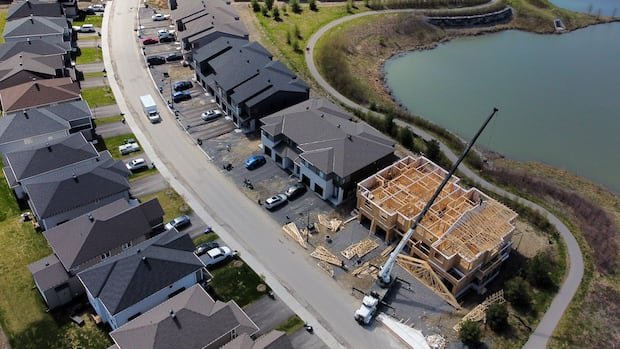

Prime Minister Mark Carney made an appearance at a morning breakfast event hosted by Ottawa’s mayor, unveiling details about the federal housing plan’s implications for Ottawa. The Liberals introduced the Build Canada Homes agency in September, pledging a $13 billion fund to support the construction of affordable housing nationwide. One of the initial locations earmarked for development is a vacant federal government campus on Heron Road.
During the event at Ottawa’s Rogers Centre, Carney disclosed plans for the city and federal government to jointly invest $400 million in erecting up to 3,000 new residential units in buildings classified as either partially or entirely affordable. The city will facilitate the initiative by reducing fees and property taxes for projects on federal lands, with a priority on utilizing Canadian building materials.
A report released in August by the parliamentary budget officer emphasized the need for Canada to build an additional 690,000 housing units by 2035, beyond the current construction pace, to address housing demands nationwide. The Build Canada Homes initiative is expected to yield 26,000 new units.
In other announcements, Carney revealed that the federal government is injecting $1.2 million into a new substance abuse pilot project in collaboration with the city and the Canadian Centre on Substance Use and Addiction. The project aims to establish a coordinated response to crime and substance abuse while fostering skills development. The pilot intends to guide individuals towards safer cultural and recreational activities and enhance the response to dangerous drugs.
Furthermore, Canada is vying to host the 2028 La Francophonie summit in Ottawa-Gatineau, gathering around 90 member states and observers. The country last hosted the summit in 2008.
Simultaneously, the city and province are collaborating to construct 33 modular townhomes comprising three to four bedrooms each on Beechcliffe Street near Woodroffe Avenue and Knoxdale Road. Ottawa is investing $3 million in the project and providing the land, with the Ontario government contributing $3.4 million and an additional $3 million from the province’s Building Faster Fund. Habitat for Humanity, a global charity, will also play a role in the project.