

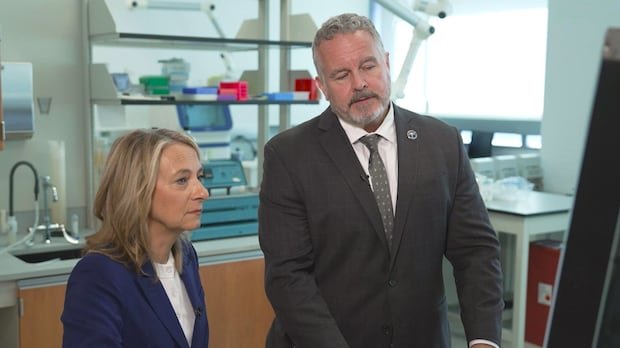

In a Manhattan laboratory, forensic scientists in white lab attire are diligently working to fulfill a promise made 25 years ago. They are extracting DNA from numerous human remains recovered after the terrorist attacks on the World Trade Center, striving to match them with samples provided by family members from personal items like toothbrushes and razors.
The methodology used to extract DNA has evolved, along with forensic investigative techniques that were not available in 2001. Mark Desire, the assistant director of forensic biology at the New York City Office of the Chief Medical Examiner, expressed the profound impact of being able to identify and reunite a loved one with their family after years of scientific advancement.
Approximately 40% of the 2,753 individuals who perished at Ground Zero remain unidentified, including around 10 of the 24 Canadian victims. Recently, the lab achieved its first identification of previously unknown remains using an innovative technique. The individual’s identity was kept confidential at the family’s request.
This breakthrough method combines DNA testing with genetic genealogy, leveraging family tree research conducted by the New York City Police Department. Described as a pioneering advancement by Dr. Jason Graham, New York’s Chief Medical Examiner, this technique is expected to facilitate numerous identifications in the future.
The process of excavating and preserving the remains faced significant challenges. Desire, who was a novice scientist at the New York crime lab on September 11, 2001, vividly recalls the chaotic events of that day. Amidst the collapse of the towers, he narrowly escaped, sustaining injuries while preserving crucial evidence.
The World Trade Center site was transformed into a massive debris pile, equivalent to covering eight city blocks if spread out. Despite the challenging conditions that degraded DNA, scientists persisted in their efforts to recover and identify remains.
Over the years, advancements in DNA extraction techniques have enabled more efficient identification processes. However, bone remains particularly challenging due to the necessity of pulverizing them to extract DNA. Thousands of samples remain unidentifiable due to severe burning, underscoring the complexity of the identification process.
The latest technique offers renewed hope by utilizing genomic sequencing and genealogical methods to establish familial connections. The Chief Medical Examiner’s office urges families to provide DNA samples to facilitate more matches and potentially identify individuals with unclaimed remains.
While the lab’s efforts continue, some families opt not to receive notifications if a match is made due to the potential emotional distress. Each identification brings closure to some families, while others, like Canadian expat Abigail Carter, find solace in personal tributes to honor their loved ones.
Ultimately, the quest to identify and honor the victims of the September 11 attacks remains a poignant reminder of the resilience and compassion exhibited by those involved in the ongoing forensic work at the Manhattan lab.