

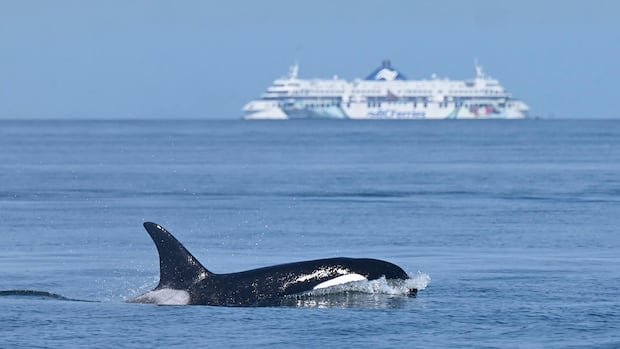

Whale detection technology will be integrated onto a limited number of B.C. Ferries ships later this year. Leslie James, the environmental sustainability director at B.C. Ferries, mentioned that efforts are underway to identify the appropriate technology for this purpose. James stated that the request for information (RFI) seeking whale detection technology suitable for installation on their vessels is in its final stages.
The preference lies in selecting a technology that can be easily mounted on the vessels, particularly capable of functioning effectively under low light and adverse weather conditions typical of the West Coast environment. The initial deployment of these detection devices will be on vessels serving the northern routes to Prince Rupert, Haida Gwaii, and Vancouver Island, with potential expansion to other routes in the future.
Notably, the decision to equip vessels with whale detection devices stems from past incidents, such as the unfortunate collision that resulted in the death of a humpback whale struck by a B.C. Ferries vessel in Wright Sound in September 2025. To prevent such occurrences, B.C. Ferries CEO Nicolas Jimenez disclosed that the Northern Expedition route will reduce its travel speed from 18 knots to 10 knots as of June 1, aiming to positively impact the marine ecosystem.
The issue of vessel strikes poses a significant threat to marine mammals, as highlighted by Sean Brillant, a senior conservation biologist. Despite efforts to mitigate risks, incidents involving whale strikes, even at reduced speeds, remain a concern. Brillant emphasized the importance of implementing solutions such as rerouting vessels to minimize these risks.
Janie Wray, CEO of North Coast Cetacean Society and B.C. Whales, stressed the need for increased research efforts in British Columbia to understand the impact of vessel strikes on various whale species. Additionally, Lindsay Kolb from Straitwatch emphasized the lack of awareness and education among watercraft operators regarding regulations and best practices for interacting with marine mammals.
To address these challenges, collaborative efforts between B.C. Ferries, the Department of Fisheries and Oceans (DFO), and Transport Canada are ongoing to enhance measures aimed at preventing whale strikes. Reporting whale sightings through designated apps can also help alert vessel operators and contribute to safeguarding marine life.