

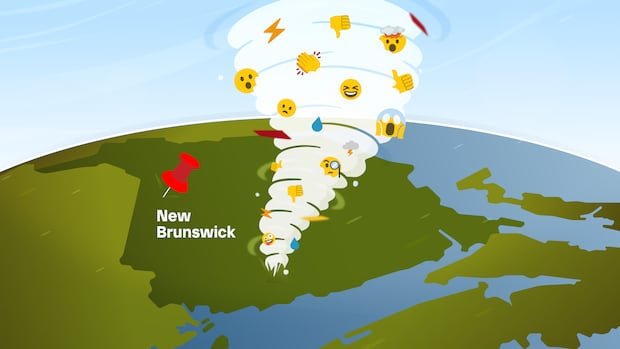

On July 14, Environment Canada issued a severe thunderstorm watch for New Brunswick, indicating favorable atmospheric conditions for thunderstorm development. The watch also mentioned a potential tornado risk. Despite no severe thunderstorms or tornadoes occurring, social media was abuzz with misinformation and unreliable images causing panic.
Psychology professor Sander van der Linden from the University of Cambridge stated that extreme weather events are breeding grounds for misinformation due to real-time urgency and uncertainty. He explained that a “watch” advises readiness for potential severe weather, while a “warning” demands immediate action.
Meteorologist Jill Maepea clarified that the tornado risk was low when the watch was issued. Despite efforts to predict convective weather in advance, rapid developments and dissipation make tracking such storms challenging. People criticized Environment Canada on social media for perceived delays in issuing storm notices, leading to misinterpretations and confusion.
The aftermath saw continued social media uproar, with some expressing disappointment over the lack of a storm and others sharing fake storm images. Van der Linden highlighted the challenge of distinguishing real from fake with hyperrealistic AI, emphasizing the importance of verifying sources. Aaloak Jaswal from the University of New Brunswick warned of AI’s ease in creating convincing misinformation, urging vigilance in verifying information during emergencies.
Jaswal emphasized the risk posed by repeated exposure to misinformation, potentially undermining trust in official sources. He stressed the importance of verifying sources to combat misinformation. Van der Linden advocated for “pre-bunking” to warn others about misinformation, promoting a community-led approach to ensure a healthy information environment and safety.