

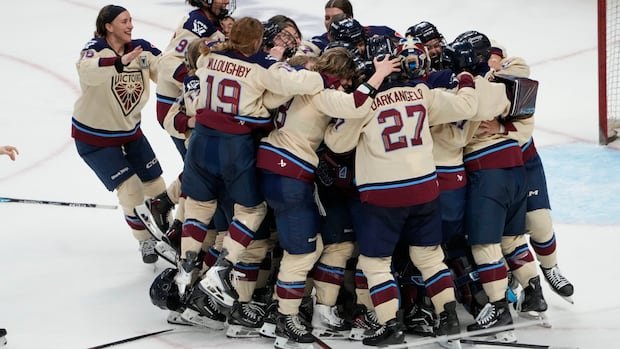

Marie-Philip Poulin’s collection of awards now includes a Walter Cup title and Ilana Kloss Playoff MVP honor. Considered one of the top female hockey players globally, these accolades join Poulin’s already extensive list of achievements. Despite her success, the pay gap between male and female athletes is glaring, with professional women’s hockey players earning significantly less than their male counterparts.
In the 2025-26 season, Poulin earned a salary of $110,216, as reported by the PWHL Players Association. This salary disclosure follows a vote by players to make this information public, aiming to provide transparency and context for negotiations within the league.
Among the league’s top earners last season were Ottawa’s Emily Clark ($126,090), New York’s Sarah Fillier ($125,000), Ottawa’s Brianne Jenner ($122,003), and Montreal’s Abby Roque ($116,699). However, a substantial portion of players earned less than $50,000, with 17 players receiving the league-minimum contract of $37,131.50, which escalates annually by three percent under the current collective bargaining agreement.
The PWHL does not impose a salary cap for individual teams but requires each team to meet an average annual base salary, which increased to $58,349.50 last season. Ottawa exceeded this average, while New York had the lowest average salary. The Walter Group owns all PWHL teams, ensuring equal resources across the league.
As the league faces significant changes with expiring contracts and the addition of four new teams, players are locked into the current salary structure until 2031. Despite calls for increased pay, players are unlikely to see substantial raises beyond the standard three percent annual increase.
The introduction of benefits such as maternity leave and housing stipends has provided players with security, but the league’s rapid growth may hinder salary increases. PWHL executives aim to elevate player compensation as the league expands, drawing parallels to recent lucrative deals in other women’s professional sports leagues.
GMs in the PWHL must navigate salary constraints creatively, as exemplified by players like Poulin, Desbiens, and Stacey renegotiating contracts to bolster team depth. Sacrifices made by players like Stacey have paid off, with a shared commitment to achieving success on the ice.
The release of salary figures sheds light on the financial landscape of the PWHL, prompting discussions on fair compensation for women athletes in professional hockey.