




This week’s episode of Quirks & Quarks features Bob McDonald:
Voyager 1 nearing a historic milestone of one light-day
On November 18, Voyager 1 will be positioned 25.9 billion kilometers from Earth, marking the first time a human-crafted object has achieved a distance of one light-day. Bob McDonald recalls the launch of Voyager 2 from Cape Canaveral, Florida, on August 20, 1977, alongside Jon Lomberg, the artist and design director of the Golden Record, which is a time capsule on both spacecraft. They reconnect to reminisce about the launch and discuss the mission’s significance. Joe Westlake, a space physicist and head of NASA’s heliophysics division, elaborates on how the Voyager spacecraft continue to yield scientific insights about the galaxy beyond our solar system, nearly five decades later.
Accelerating renewable energy could prevent a ‘global meltdown’
As the United Nations’ yearly climate change conference commences in Turkey, the world is on the verge of exceeding the Paris Agreement’s target of a 1.5 C increase in temperature. Experts assert that a global push to reduce carbon emissions needs to intensify to prevent a “global meltdown.” John Pomeroy, a hydrologist from the University of Saskatchewan, presented a recent study in Science discussing the vulnerable state of the Earth’s polar regions, predicting that even maintaining a 1.5 C limit would lead Canada into “a very bad spiral, into dysfunction.” Another study featured in Nature Climate Change by Corinne Le Quéré, a Canadian climate scientist at the University of East Anglia, revealed that from 2019 to 2025, 59 nations, including Canada, managed to decrease their carbon emissions while simultaneously boosting their GDP, although she emphasizes that much more must be done to transition to renewable energy sources.

Recent research indicates that while there have been some advancements in moving from fossil fuels to clean energy, a faster pace is necessary to prevent a ‘global meltdown.’ (Jeff McIntosh/The Canadian Press)
Strongest evidence of dinosaur blood discovered by scientists
Scientists report the discovery of fossilized blood evidence within a dinosaur leg bone dating back 115 million years. A research team led by Kliti Grice, a geochemist at Curtin University in Australia, found molecular traces of heme, an iron-rich component of blood, embedded in the dinosaur bone. Further investigation uncovered microscopic structures resembling red blood cells, along with additional chemical signatures of blood. Utilizing 30 different methods, the research team published their findings in the journal PNAS. Grice stated that these results provide compelling evidence that certain biomolecules can endure far longer than previously believed under specific burial circumstances.

Researchers have found remnants of dinosaur blood preserved in this seemingly ordinary thigh bone for 115 million years. (Curtin University)
Exploring the connections between humans and birds
Throughout human history, birds have been a constant presence — depicted in our art, featured in our clothing, and served on our plates. However, this fascination has contributed to their decline and even extinction. Studies indicate that nearly three billion adult breeding birds in North America vanished between 1970 and 2019. Pete Dunne, the former director of the Cape May Bird Observatory in New Jersey, has authored over 20 books on birds, with his latest publication titled Under Their Wing: How Birds Shape the Human Experience.

Acclaimed birder Pete Dunne delves into the intricate ways in which human development has been intertwined with birds in his book Under Their Wing: How Birds Shape the Human Experience. (Chelsea Green Imprint / Penguin Random House)
Genetic factors influence medication responses
It’s often uncertain how your body will react to a new medication until you actually take it. Some medications may yield different effects depending on an individual’s genetic makeup. While researchers have identified connections between certain genes and medication response, this information is not consistently applied in practice — partly due to a lack of data regarding the prevalence of these genetic variations globally. A recent study published in Science by Philip Empey, an associate professor at the University of Pittsburgh, examined a diverse group of 100,000 Americans to better understand the frequency of these genetic variations.
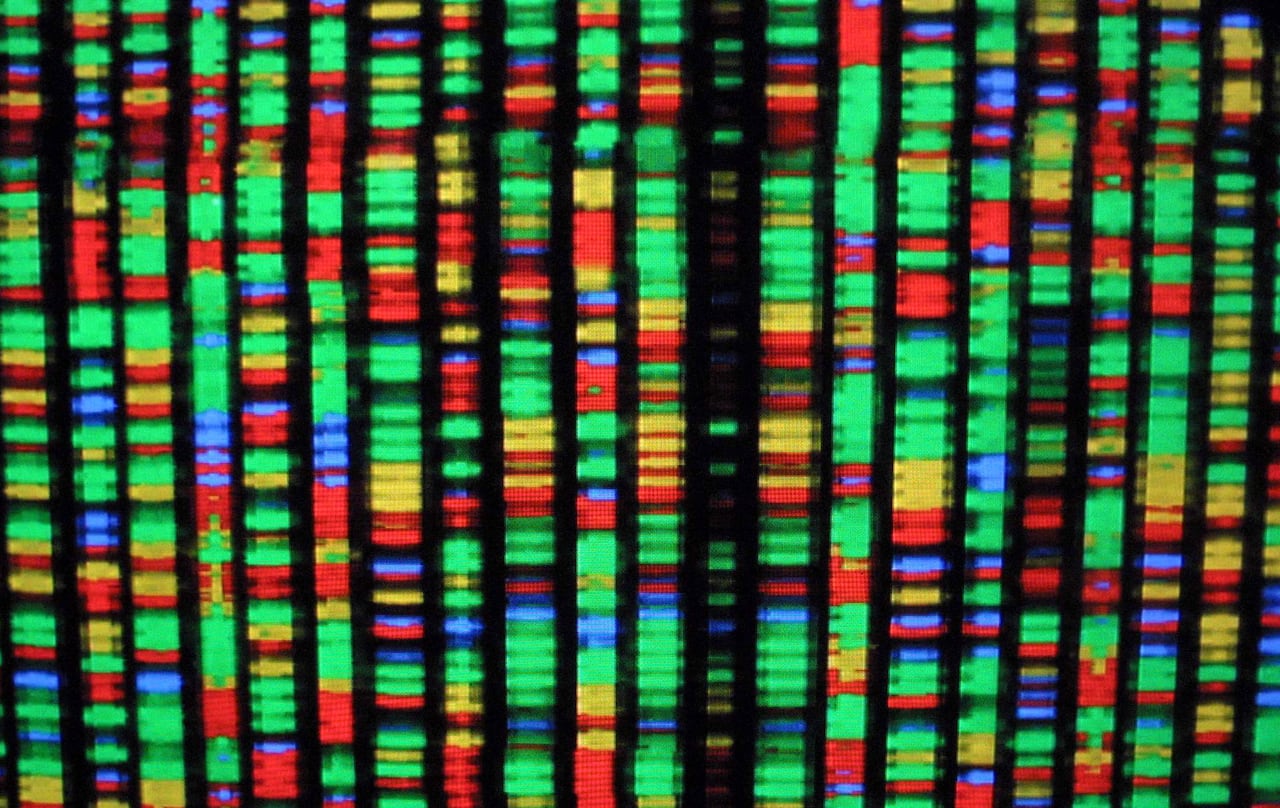
A digital representation of the human genome. (Mario Tama /Getty Images)