

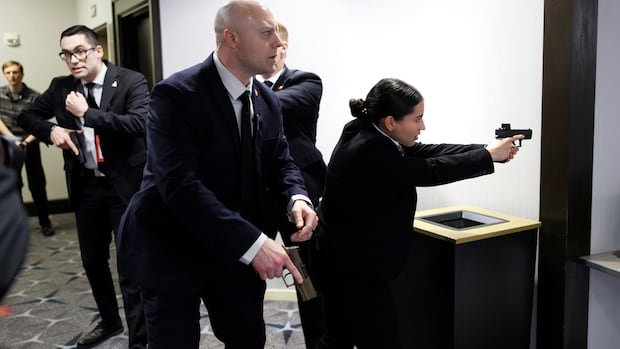

The U.S. Justice Department made significant moves on Wednesday to revise a set of gun regulations, marking a notable shift in firearm policy supported by Second Amendment advocates within President Donald Trump’s base. Gun control activists criticized these changes as risky and negligent, especially in light of recent events where an individual armed with guns and knives attempted an attack at the White House Correspondents’ Association dinner.
One of the key amendments announced involves the potential repeal of a 2024 rule established during the Biden administration. This rule aimed to compel a greater number of firearms dealers across the U.S. to conduct background checks on buyers at gun shows and other non-traditional sales venues. Referred to as the “gun show loophole,” this rule sought to address the sale of firearms by unlicensed dealers who bypass background checks, potentially allowing prohibited individuals to acquire guns.
Gun rights organizations and states led by Republicans had legally challenged this rule, arguing that it infringed upon the Second Amendment and that former President Joe Biden lacked the authority to implement it.
Acting U.S. Attorney General Todd Blanche described the series of revisions as the most extensive regulatory reform within the Bureau of Alcohol, Tobacco, Firearms and Explosives (ATF) history. Blanche emphasized that these changes align with U.S. Supreme Court precedents while reducing unnecessary burdens on both firearm sellers and lawful gun owners. He highlighted the importance of crafting regulations that are informed by a deep understanding of how firearm businesses and lawful gun owners operate, ultimately enhancing public safety.
Critics, however, accused the administration of yielding to gun rights activists by relaxing regulations, which they argued could compromise national safety. John Feinblatt, president of Everytown for Gun Safety, expressed concern over the administration’s decision to weaken gun safety laws following recent violent incidents.
The revisions were approved shortly after the confirmation of Robert Cekada, a seasoned law enforcement officer, as the head of the ATF. Cekada, who has been involved with the ATF since 2005 and served as its deputy director, is only the third individual to be officially appointed to lead the agency since the position became subject to Senate confirmation in 2006. The ATF has historically faced scrutiny from conservatives regarding its role in gun regulation, despite the agency’s efforts in combating illegal firearms and violent crime.
Blanche commended Cekada’s appointment, stating that he is well-suited to lead the ATF during this critical period.