

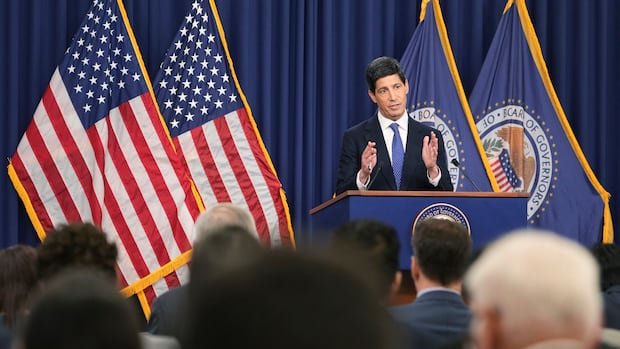

The U.S. Federal Reserve implemented a quarter-point increase in its benchmark interest rate, marking the first hike since 2023 as a measure to address persistently high inflation. This adjustment brings the Fed’s key rate to approximately 3.9 percent and may lead to increased borrowing expenses for American mortgages, auto loans, and credit cards. The decision comes amidst challenges faced by Americans due to soaring costs of groceries, gas, and housing, with affordability emerging as a crucial issue in the upcoming midterm elections.
Furthermore, the Federal Reserve’s rate-setting committee indicated the likelihood of a second rate hike later this year, projecting a rate of 4.1 percent. Fed Chair Kevin Warsh, appointed by President Donald Trump, stressed the economy’s acceleration since the previous rate decision in July. Warsh highlighted the persistent inflation surpassing the Fed’s two percent target, emphasizing the necessity for corrective action.
The Fed’s unanimous support for the rate hike aimed to aid a prompt return to the two percent inflation goal. Warsh pointed out that escalating tensions between the U.S. and Iran, resulting in increased gas prices, influenced the decision for rate hikes. Since assuming leadership at the Fed, Warsh has emphasized the institution’s commitment to curbing inflation, aligning policy decisions with data trends.
Contrary to his prior stance, Warsh, during his nomination consideration, advocated for rate reductions; however, he now asserts the importance of controlling inflation. The ongoing Iran conflict continues to impact gas prices, posing a threat to broader inflation levels. Recent data revealed that inflation, as per the Fed’s preferred measure, stood at 3.7 percent in July compared to the previous year.
Retail sales surged by 1.2 percent in August, signaling robust consumer spending despite prevailing economic uncertainties. This spending resilience suggests that current interest rates are not significantly hindering economic activity to curb inflation. Wall Street investors foresee additional rate hikes in December and March, anticipating a total of three increases.
Economists opine that the Fed’s rate hike does not necessitate immediate similar actions by the Bank of Canada. While both countries face inflationary pressures driven by escalating energy prices due to the Iran conflict, Canada’s inflation rate remained stable at three percent in August, exceeding the central bank’s target. The U.S. faces more severe inflation challenges, indicating a need for more corrective measures to align with the two percent target.
Canada’s comparatively weaker economy, impacted by tariffs and higher unemployment rates, alleviates the immediate pressure for rate hikes. Economic forecasts suggest that while both countries experience inflationary pressures and rising bond yields, their starting points differ. Consequently, the U.S. is expected to raise rates sooner, with the Bank of Canada likely to delay rate adjustments until 2027.