

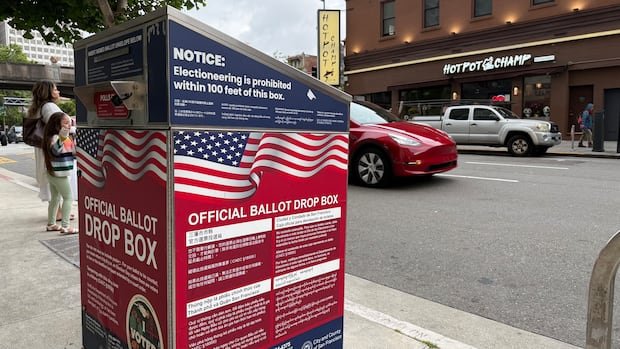

Over the past few months, President Donald Trump of the United States has been pushing for new restrictions on voting through mail, a method utilized by about one-third of American voters during elections. Despite the upcoming crucial midterms being less than seven weeks away, the U.S. Supreme Court has intervened to stop a plan proposed by the Trump administration that could have prevented millions of people from casting their votes through mail-in ballots. Here’s a breakdown of the situation.
What is the significance of mail-in voting in the United States?
Tens of millions of Americans make use of mail-in ballots to vote in both presidential and midterm elections. The percentage of Americans opting for mail-in voting gradually rose through the 2010s, reaching 25% in 2018. The figure surged to 43% in 2020 due to the COVID-19 pandemic. In the 2024 presidential election, approximately 30% of the 158 million votes were cast through mail-in ballots, as reported by the U.S. Election Assistance Commission.
These rates significantly exceed the proportion of mail-in voters in federal elections in Canada. For instance, in the 2025 general election in Canada, a record 1.25 million individuals voted by mail using the special ballot process, constituting only 6.3% of the nearly 20 million total ballots cast nationwide.
What are the objections raised by Trump against mail-in voting?
Trump has strongly criticized states that expanded access to mail-in voting for the 2020 presidential election. He has baselessly claimed that the election was stolen from him due to fraudulent activities, with mail-in voting being a major point of contention. Research from the Brookings Institution, a non-partisan think-tank in Washington, indicates that fraud in mail-in voting is extremely rare, occurring in about four cases out of every 10 million mail-in ballots cast.
Since his reentry to the White House last year, Trump has predominantly focused on unproven allegations that mail-in ballots facilitate large-scale illegal voting by non-citizens, aiding the Democratic Party in winning elections.
Who typically opts for mail-in voting?
Although millions of registered Republicans, including Trump, have previously chosen to vote by mail, evidence suggests that restricting mail-in ballots could offer a benefit to Republicans in closely contested congressional races and swing states. Research conducted by the MIT Election Data Lab and the Pew Research Center indicates that in 2020 and 2024, registered Democrats were more inclined than registered Republicans to vote by mail, although this gap narrowed in the latest presidential election. The research also highlights that individuals aged 65 and above are the most frequent users of mail-in voting.
How did Trump attempt to limit mail-in ballots?
Trump’s strategy aimed to grant the U.S. Postal Service, a federal agency under the administration’s control, the authority to determine voters’ eligibility to receive mail-in ballots. This approach deviates from the existing U.S. voting system where states are responsible for managing and conducting elections.
In March, Trump issued an executive order instructing the Department of Homeland Security and the Social Security Administration to compile lists of eligible U.S. citizens for voting. Subsequently, the postal service was directed to dispatch ballots solely to individuals on these lists and establish a system to monitor mail-in voters.
Additionally, the plan would have mandated states to redesign their ballot packages to adhere to new postal service regulations. Many states argued that complying with these rules before the election would be unfeasible, potentially disenfranchising individuals intending to vote by mail. Led by California, states initiated a legal challenge, resulting in a federal court judge issuing injunctions against the plan. In an emergency ruling on Monday, the Supreme Court rejected the administration’s plea to lift the injunction.
How did Trump respond to the court ruling?
In a lengthy post on his Truth Social platform, Trump criticized the court’s decision, labeling mail-in voting as a “totally CORRUPT and out of control” disaster that is mocked globally. He condemned the ruling as terrible, alleging that it facilitates cheating. Trump also censured the court for making what he described as destructive decisions in the nation’s history. Notably, all three justices appointed by Trump during his first term dismissed the administration’s application in this case.
What lies ahead?
Although the Supreme Court’s ruling seems to pave the way for the normal execution of mail-in voting in the upcoming November midterm elections, it is anticipated that Trump will continue to express discontent on the matter. If the Republicans lose control of the House or the Senate