

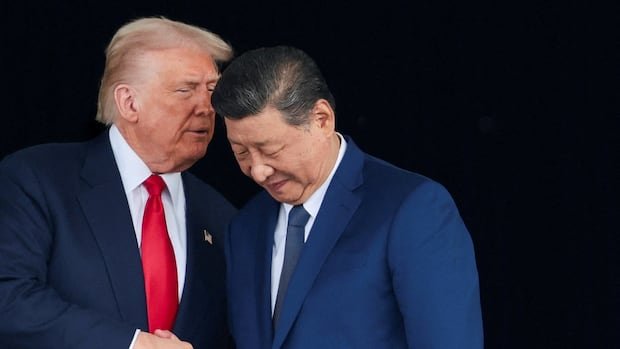

U.S. President Donald Trump announced an agreement with Chinese President Xi Jinping to reduce tariffs on China in exchange for Beijing’s efforts to combat the illegal fentanyl trade, resume purchases of U.S. soybeans, and maintain exports of rare earths. The meeting between Trump and Xi in Busan, South Korea, marked the conclusion of Trump’s Asia tour, during which he also highlighted progress in trade discussions with South Korea, Japan, and Southeast Asian countries.
Following the meeting, Trump expressed satisfaction, rating the talks as “12 out of 10.” He disclosed the plan to lower tariffs on Chinese imports from 57% to 47%, specifically targeting fentanyl precursor drugs by halving the related tariff rate to 10% from 20%. Trump emphasized Xi’s commitment to combat the flow of fentanyl, a potent synthetic opioid responsible for a significant number of overdose deaths in the U.S.
Despite Trump’s optimism, only India and Brazil currently face higher tariff rates among major U.S. trading partners. Xi emphasized the need for further cooperation, with China’s Commerce Ministry announcing a one-year pause on certain countermeasures. The stock markets had surged before the meeting on hopes of resolving the trade dispute between the two economic giants, but concerns about the sustainability of the agreement led to a decline in equity markets.
Discussions during the APEC summit highlighted mutual concerns and a willingness to address them collaboratively. Xi reassured Trump about the normalcy of occasional frictions between superpowers and expressed a desire to strengthen China-U.S. relations. Apart from tariff adjustments, China sought relaxed export controls on sensitive U.S. technology and a rollback of new U.S. port fees affecting Chinese vessels.
Trump did not immediately comment on U.S. concessions but mentioned China’s commitment to purchasing significant quantities of U.S. soybeans and other agricultural products. Notably, China recently bought its first batch of U.S. soybeans in several months. Previous trade agreements, including reduced tariffs and the resumption of rare earth magnet exports from China, are set to expire soon.
Trump highlighted the importance of diversifying rare earth supplies during his trip, aiming to reduce China’s dominance in this critical sector. The leaders did not delve into discussions regarding Nvidia’s cutting-edge technology during the meeting. U.S. Treasury Secretary Scott Bessent revealed China’s pledge to buy 12 million metric tonnes of American soybeans this season and an annual commitment of 25 million tonnes for the next three years. Additionally, other Southeast Asian nations have agreed to purchase 19 million tonnes of U.S. soybeans.