

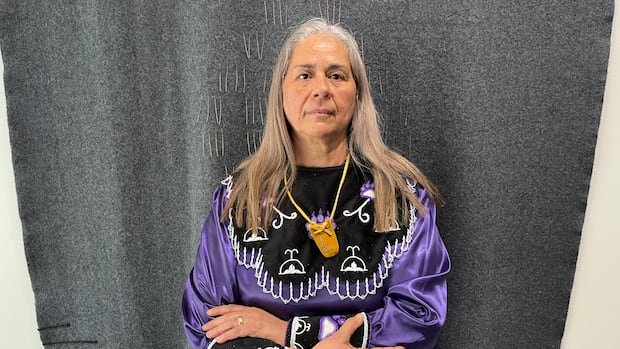

In the last five years, the Survivors’ Secretariat at Six Nations has gathered more than 36,000 records linked to students of the Mohawk Institute Residential School, revealed lead Laura Arndt. This non-profit, survivor-led organization has been exploring the Mohawk Institute in Brantford, Ontario, the longest-operating residential school in Canada, since 2021.
Despite obtaining thousands of records via access to information requests from archives, privacy laws prevent them from disclosing these to families of survivors or missing children. Arndt emphasized that while they have access to the records, they lack ownership or control over them, likening their position to that of children peering through a window.
Arndt was among the panelists who provided testimony on searches for missing children and unmarked burials at residential schools to the Permanent Peoples’ Tribunal. This independent international opinion court initiated a week-long inquiry into missing Indigenous children and unmarked burials associated with residential schools at the daphne art centre in Montreal.
Initiated by the Native Women’s Shelter of Montreal in 2024, the tribunal is scrutinizing Canada’s responsibility for the residential school system and the human rights transgressions linked to it. Crown-Indigenous Relations and Northern Affairs Canada stated that the Government of Canada will not participate in the proceedings.
Established in 2021, the Survivors’ Secretariat, under Arndt’s leadership, has identified over 6,000 children who attended Mohawk Institute and 105 children who perished there. Their primary aim is to “bring the children home,” although this doesn’t always involve exhuming burial sites, and their findings from ground searches are often not made public.
Arndt stressed that respecting the dignity of the children is paramount, stating, “You don’t need to dig up ancestors; it’s not a spectacle. We seek to honor the lives of children.”
The Secretariat’s efforts have been hindered by a reduction in federal funding for ground searches at residential schools in recent years. Despite receiving approximately $10.3 million from the $320-million Residential Schools Missing Children Community Support Fund between 2021-22 and 2023-24, the Secretariat faced challenges due to Canada’s attempts to reduce and cap the available funding, a decision that was later reversed.
Archaeologist Scott Hamilton, a retired professor at Lakehead University, highlighted the extensive and intricate nature of searches for unmarked burials related to residential schools. He emphasized the reliance on survivor testimonies and archival documents in these Indigenous-led investigations.
Hamilton’s research into archival records revealed that children who died at residential schools were more likely to be buried on school or church grounds than returned to their families for burial. The funding cuts have eroded trust between search communities and the government, leading to many incomplete searches.
The lack of funding and its adverse effects on ground searches and organizations have fueled denialism regarding residential schools, as noted by Hamilton and Arndt. Arndt expressed hope that this denialist mindset represents the final resistance of a history that disregards the truth.
The tribunal proceedings are ongoing, with an interim ruling expected on Friday and a full ruling scheduled for September 30. Readers seeking emotional or crisis support can contact the national 24-hour Indian Residential School Crisis Line at 1-866-925-4419 or the Hope for Wellness hotline at 1-855-242-3310, available 24/7.