

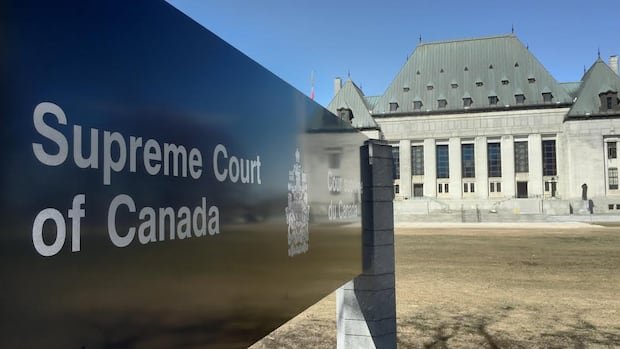

The Supreme Court of Canada rejected two challenges to the Jordan framework on Friday, affirming that the time constraints imposed on criminal trials before charges are dismissed are valid under Section 11(b) of the Charter. In a 2016 ruling, the Supreme Court established strict time limits for criminal trials – 18 months for provincial court proceedings and up to 30 months for Superior Court cases, known as the Jordan framework.
The recent rulings are linked to two cases presented to the Supreme Court. The first case, R. v. Vrbanic, was intricate and involved 18 co-accused individuals in 10 separate prosecution groups facing drug trafficking charges. The second case, R. v. Jacques-Taylor, involved two men jointly tried for drug and firearm offenses.
Both cases were heard in provincial court and were halted when they exceeded the 18-month deadline. Vrbanic’s case ran four days beyond the deadline, while Jacques-Taylor’s case was delayed by two weeks.
In Vrbanic’s case, the prosecution urged the Supreme Court to grant courts “residual discretion” to extend trials based on judicial judgment to prevent dismissals for minor delays. Chief Justice Richard Wagner, in a unanimous decision, dismissed this request, stating that the Jordan framework already allows the flexibility needed to address the prosecution’s concerns.
To offer guidance to lower courts in the future, the Supreme Court clarified the criteria for exceptional circumstances justifying trial delays beyond the Jordan limit.
Chief Justice Wagner highlighted two categories of exceptions permitting trial extensions. The first category, the case complexity exception, acknowledges that certain cases with extensive time demands may not be feasibly completed within the set time limits. The court identified specific requirements such as a high number of witnesses or charges, joint proceedings against multiple co-accused, significant expert evidence needs, and intricate legal issues.
The second category, discrete exceptional circumstances, refers to delays beyond the Crown’s control that could not have been foreseen or addressed. For instance, in Jacques-Taylor’s case, the trial was delayed due to the unavailability of a co-accused’s defense attorney.
The Court emphasized that exceptional circumstances, such as the COVID-19 pandemic, do not need to be rare or catastrophic to justify delays; they just have to be beyond the court’s control.
Despite upholding the integrity of the Jordan framework, the Supreme Court allowed the appeals in both cases and ordered new trials to be conducted.