

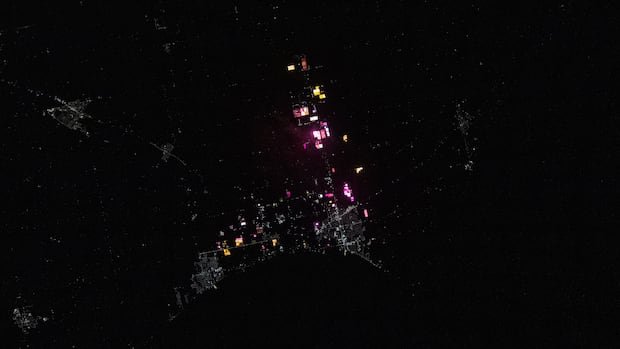

In a region of southwestern Ontario, the installation of vibrant pink and canary-colored lights atop numerous greenhouses has created a dazzling spectacle visible even from space. These colorful lights, now a common sight in the night sky, are a result of the growing trend among vegetable and cannabis producers to use artificial lighting to cultivate plants year-round in locations like Leamington and Kingsville, Ontario.
The influx of greenhouse technology has not only illuminated the skies but also sparked both admiration and unease in the local communities. In response to concerns raised by residents, bylaws have been implemented to regulate the brightness emanating from the greenhouses after dark. Although measures have been taken to minimize light pollution, the glow remains visible across the region and has even caught the attention of astronauts aboard the International Space Station.
The rapid expansion of greenhouses in the area, as evidenced by recent satellite images, can be attributed to various factors such as the legalization of cannabis in Canada and the adoption of advanced lighting technology for year-round plant growth. The demand for fresh produce, particularly during the disruptions caused by the COVID-19 pandemic, has further fueled the growth of the greenhouse industry.
Despite the economic benefits and increased food security provided by the greenhouse boom, concerns have been raised regarding the ecological impact, particularly on the unique Carolinian ecosystems and migratory paths for birds and butterflies in the region. Consequently, local authorities in Kingsville and Leamington have enforced bylaws to address the escalating light pollution from the greenhouses.
While efforts have been made to mitigate the impact of the greenhouse lights, challenges persist in achieving full compliance with the regulations. Ongoing enforcement and collaboration between growers and regulatory authorities are crucial in balancing the economic benefits of greenhouse operations with environmental considerations.
Research into greenhouse light pollution has shown that the effectiveness of light-blocking curtains can significantly reduce the amount of light emitted. However, external factors such as weather conditions and the brightness of the moon can influence the perceived brightness of the greenhouse glow. As the community strives to strike a balance between economic growth and environmental stewardship, ongoing monitoring and adaptation will be essential in managing the impact of greenhouse lighting on the local ecosystem.