

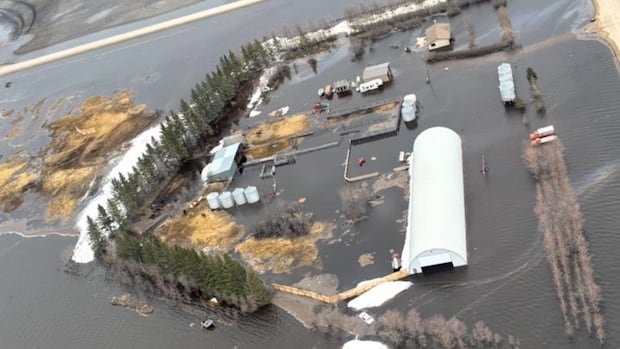

This spring, instead of flowers blooming after April showers, Saskatchewan experienced significant flooding due to the rapid melting of a snowpack that was above average, according to experts. The province saw a prolonged winter with heavy snowfall, leading to excessive moisture on top of existing snow. As temperatures rose in early May, the snowpack began to melt rapidly, causing water to flow quickly over the frozen ground.
By Monday, 15 local emergencies were declared in Saskatchewan due to flooding, with the potential for more to come. The worst-hit areas include the northwest, northeast, and east-central regions, where highways have been closed and communities isolated. The Water Security Agency issued multiple advisories since mid-April, with a high-flow advisory still in effect across a wide area of the province.
The Quill Lakes basin and Carrot River are experiencing high flows, with some areas facing rare 1-in-50 to 1-in-200-year events. Experts noted that while the fast spring melt is a primary cause of the flooding, other factors like land development and previous wildfires have contributed to the situation.
Colin Whitfield, an associate professor at the University of Saskatchewan, highlighted the impact of spring runoff and previous wildfires on the flooding. He mentioned a transition from dry to wet conditions in the province, leading to sudden inundation in previously drought-affected regions. Whitfield emphasized that stream systems are being pushed to their limits by these extreme weather events.
Residents are urged to prepare for more extreme weather conditions in the future, with a focus on better water management practices to mitigate the effects of flooding on the land and surrounding areas. The need for comprehensive watershed management was emphasized as a crucial step in addressing the ongoing challenges posed by flooding in Saskatchewan.