

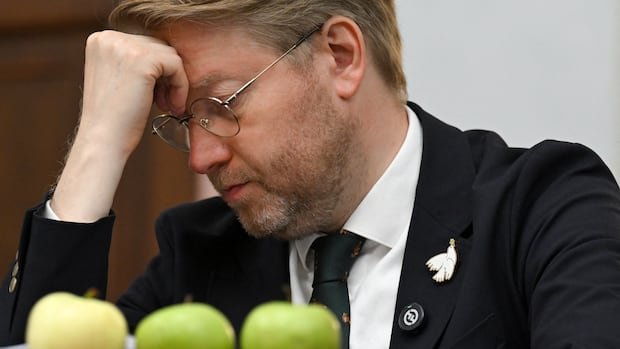

Russia’s top court has directed the removal of the sole party opposing the Kremlin’s military actions in Ukraine from the upcoming parliamentary election ballot. The Supreme Court invalidated Yabloko’s registration following an appeal from a pro-Kremlin party, despite the initial inclusion of Yabloko by the Central Election Commission alongside 10 other parties. Once known for its liberal stance in parliament and criticism of the government, Yabloko lost its parliamentary seats as the Kremlin strengthened its control over Russian politics.
Over the years, Yabloko was the sole registered opposition party that opposed the deployment of troops to Ukraine. The party’s campaign messages advocated for a ceasefire, diplomacy, peace, and a Russia free from fear and political oppression. Grigory Yavlinsky, a veteran liberal politician and co-founder of Yabloko, expressed disappointment over the court ruling and stated the party’s intention to appeal, emphasizing the importance of engaging in dialogue with dissenting voices.
Yabloko received endorsements from various Russian opposition figures in exile, including Yulia Navalnaya, Ilya Yashin, and Vladimir Kara-Murza, for its anti-war stance. Despite attempts to distance the party from support by Kremlin critics abroad, Yabloko faced challenges, with Kremlin-aligned parties criticizing its stance on Ukraine and calling for legal actions against it.
The lawsuit filed by the Motherland Party accused Yabloko of copyright infringement, exceeding campaign spending limits, and promoting actions against Russia’s territorial integrity. Yabloko’s representatives denied the accusations, highlighting the party’s commitment to peaceful solutions. The party members have encountered increasing pressure, with some facing imprisonment and “foreign agent” designations amid a broader crackdown on dissent by the Kremlin.
Yabloko’s removal from the ballot reflects the Kremlin’s unease with its anti-war platform and the growing public demand for peace and freedom. The party’s campaign for peace resonated with voters, challenging the Kremlin’s political calculations and prompting discussions about the authorities’ fear of Yabloko’s principles.