

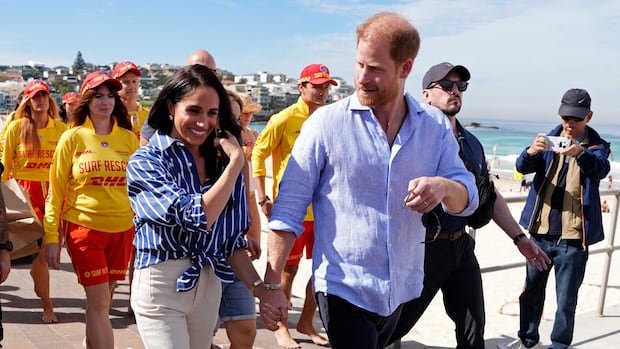

When the Duke and Duchess of Sussex, Prince Harry and Meghan Markle, make their way back to the United Kingdom this month, they will be reentering a country that has been deeply engrossed in discussions about them from a distance over the past six years. Their children, Prince Archie and Princess Lilibet, are scheduled to start school in Britain in September, and reports suggest that the couple will reside privately outside London for an extended period while maintaining their non-working royal status.
With numerous inquiries already circulating about their return, there is speculation about whether the intense interest from tabloids in the couple will diminish this time around. Steven Barnett, a communications professor at the University of Westminster, noted the polarized portrayal of Harry and Meghan by certain sectors of the British press, labeling them as “the evil, the bad cops, it’s all very black and white,” with a tendency towards personal attacks and witch hunts.
Initial media coverage included controversial headlines like the Daily Mail’s reference to Meghan’s mother as “(almost) straight outta Compton” and The Sun’s story about “Harry’s girl on Pornhub,” which involved the tabloid finding footage of Markle from her time on the TV series Suits on a pornographic website, leading to later apologies. A Guardian analysis revealed a stark contrast in coverage between Meghan, with 43% negative articles, and Kate Middleton, with only 8% negativity.
Royal commentator Afua Hagan anticipates heightened interest in the couple’s return to the UK, describing it as stepping back into the “lion’s den” but with better preparation this time. Barnett emphasized that not only have Harry and Meghan evolved, but the British public may also be preoccupied with other ongoing narratives.
The recent legal setback in privacy lawsuits against the Daily Mail faced by Prince Harry and others could potentially trigger more harsh and vitriolic media scrutiny, according to Barnett. This development coincides with broader scrutiny of the British media following the passing of Jason Arday, a Cambridge professor embroiled in controversy over his academic record, sparking debates on media boundaries and treatment of public figures.
Nina Myskow, a former Sun columnist, drew parallels between the relentless scrutiny Meghan faced and the treatment of Professor Arday, highlighting the detrimental impact of media pile-ons. Marcus Ryder, advocating for media diversity, emphasized the systemic issues that deny Black individuals the freedom to succeed or fail on individual terms, contrasting the treatment of Black and White public figures in media narratives.
Arday’s story intertwined with larger discussions on race and diversity in elite circles, reflecting broader societal contradictions. Ryder drew a parallel between Arday’s narrative and Meghan’s, illustrating the challenges faced by Black individuals in privileged institutions rooted in hereditary privilege. As the Duke and Duchess of Sussex transition into non-working royal roles after residing in California for six years, the anticipation surrounding their return may dwindle as previous dramatic episodes have been extensively covered.
Ryder expressed hope that media coverage would accurately represent the positive sentiments many, especially Black women, hold towards Meghan Markle.