

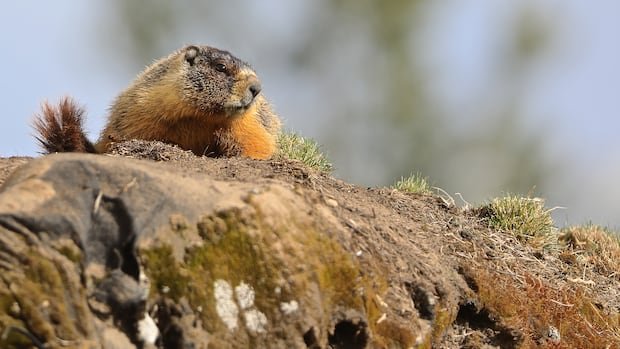

A yellow-bellied marmot, typically found in southern B.C., has been discovered at the University of Northern British Columbia’s campus in Prince George, marking the furthest north sighting of this species on record. The marmot is currently residing on a hill beneath one of the campus buildings, visible from associate professor Jamie Gorrell’s office, who specializes in marmot behavior and ecology.
Gorrell expressed his fascination with the marmot’s presence, highlighting the species’ ability to adapt to climate changes. Yellow-bellied marmots are recognized for their vibrant yellow chests and are commonly found in the western U.S. and southern Canada, with sightings typically not extending beyond Williams Lake, approximately 200 kilometers south of Prince George.
The marmot’s journey to Prince George remains a mystery, with Gorrell speculating that it may have unintentionally traveled on a vehicle carrying construction materials. Gorrell, alerted to the marmot’s presence through iNaturalist, has cordoned off the area to prevent any disturbances, aiming to determine the marmot’s arrival time after confirming a student spotted it last August.
As the marmot successfully endured its first winter in the new habitat, Gorrell acknowledged the potential for conflicts as it interacts with other marmot species in the area. The campus community has embraced the marmot’s presence, with students flocking to observe and photograph it as it emerges to feed on grass and bask in the sun. Plans are underway to set up a live webcam for people to watch the marmot throughout its daily activities.
The marmot, affectionately named “dutni,” which means Marmot in Dakelh, is attracting attention on campus, serving as a stress-reliever for students. Gorrell emphasizes the importance of allowing the marmot space and observing it from a distance to ensure its comfort and prolonged stay. While the marmot’s presence brings excitement, it also serves as a reminder of the impact of climate change on species distribution.