

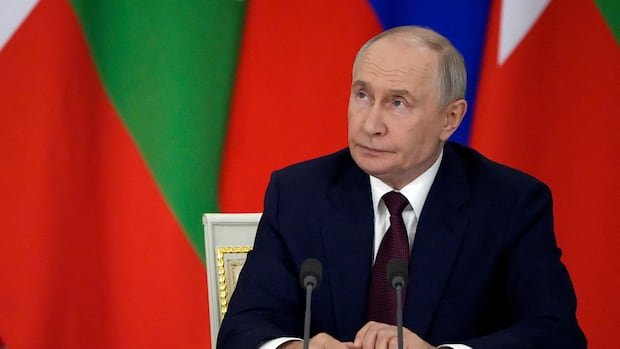

As the conflict between Russia and Ukraine enters a critical phase, a significant U.S. intelligence mission to Moscow has shed light on a divided consensus among allies regarding Vladimir Putin’s future actions.
Speculation has been rife among analysts that Putin, the president of Russia, may have abandoned hopes of coercing Ukraine into meeting his extreme surrender demands through U.S. President Donald Trump. This shift in strategy suggests that Putin may be contemplating expanding the conflict to conclude his five-year war against Ukraine.
Facing a deteriorating economy and a diminishing pool of volunteers willing to engage in Ukrainian combat for financial incentives, Putin is confronted with multiple potential courses of action.
Ukrainian intelligence officials anticipate a forthcoming unpopular large-scale mobilization that could see hundreds of thousands of new conscripts entering the battlefield, aiming to overwhelm Ukraine’s strained defenses.
Warnings from military think-tanks on both sides of the Atlantic have highlighted the possibility of Putin attempting to sow discord among NATO supporters by instigating provocations in Eastern Europe to fracture the alliance.
Recent hybrid attacks across Europe, including assassination attempts, sabotage, and drone intrusions, have intensified. There are concerns that Russia might seize Russian-speaking territories in neighboring countries to test NATO’s response.
Russian authorities have hinted at the prospect of targeting Western weapons manufacturers supplying Ukraine, particularly in the UK, in response to Ukrainian strikes.
The recent visit by CIA Director John Ratcliffe to Moscow sparked intense speculation about Putin’s next move. The mission, marked by the unusual arrival of Ratcliffe in a highly visible U.S. Air Force C-17 Globemaster at Vnukovo airport, signaled a significant message from U.S. officials to Russia.
The purpose of Ratcliffe’s visit initially appeared to be an ultimatum to Putin to halt grey-zone hybrid activities against NATO’s eastern flank. However, subsequent reports suggested a focus on urging Putin to end the war on Ukraine to avert worsening economic and military situations.
Canada’s substantial military presence in the Baltics, aimed at deterring Russian aggression, underscores the importance of maintaining vigilance despite differing opinions on potential Russian provocations.
As tensions escalate, Ukrainian authorities remain steadfast in their belief that Putin’s aggression will primarily target Ukraine, aiming to destabilize the country and sow discord among its populace.
Despite the risks associated with a mass mobilization, Putin may incrementally bolster his forces to advance his objectives. The evolving situation underscores the immediate threat faced by Ukraine, irrespective of international diplomatic efforts.
The repercussions of Putin’s decision-making will likely have far-reaching consequences, with Ukraine bearing the brunt of the fallout regardless of the strategic direction taken.
[Source](https://www.cbc.ca/news/world/what-the-cia-directors-mystery-trip-to-moscow-says-about-putin-s-next-move-9.7323838)