

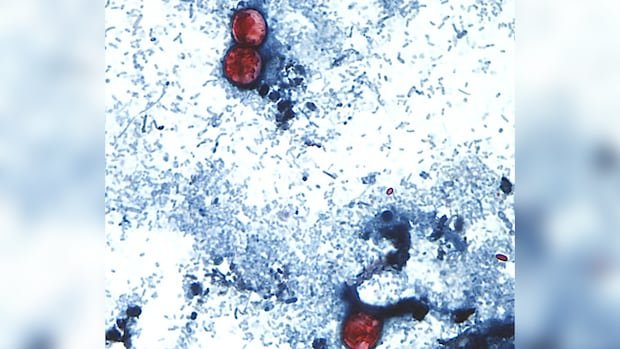

A parasitic infection causing diarrhea has triggered a significant outbreak in the United States, affecting over 1,000 individuals and resulting in multiple hospitalizations. Various states have reported cases of cyclospora infections, characterized by symptoms like watery diarrhea, bloating, fever, and nausea. While such cases are typical during the spring and summer seasons, the current surge is notably higher, marking one of the country’s largest outbreaks, with no reported fatalities.
The Public Health Agency of Canada (PHAC) clarified that there are no ongoing investigations into outbreaks in Canada, emphasizing that the parasite is not commonly found in Canadian food or drinking water sources.
Cyclospora, a minute spherical parasite, is known to cause cyclosporiasis, a condition characterized by watery diarrhea with frequent and sometimes intense bowel movements, as stated by the U.S. Centers for Disease Control and Prevention. The infection, although usually non-life-threatening, can be treated with antibiotics.
The parasite thrives in warm environments, infecting the intestines and spreading through fecal matter. Historically, contamination of fruits and vegetables by feces-infected irrigation water has been a common mode of transmission. Food safety expert Lawrence Goodridge highlighted that produce like raspberries, blueberries, and lettuce, with intricate surfaces, are prone to harboring the parasite.
The outbreak’s origin remains uncertain, with speculation pointing towards imported produce from regions like South and Central America, the Caribbean, Southeast Asia, or Africa. Symptoms may manifest up to two weeks post-exposure and persist for up to two months. While cyclospora infections are less frequent compared to other foodborne illnesses like salmonella and E. coli, recent years have seen a rise in reported cases, attributed to factors such as climate change and improved detection methods.
Michigan has reported a significant increase in cases, with 1,251 confirmed infections concentrated mainly in the southeastern region. In neighboring Ohio’s Lucas County, 306 cases have been recorded, contributing to over 400 cases in Northwest Ohio. Investigations are ongoing in 28 other states, including Illinois and New York, to identify the outbreak source, a challenging task due to the perishable nature of fresh produce.
Experts note that the outbreak, while substantial, does not pose a national health emergency, and there is no evidence suggesting increased infectiousness of the parasite. Canada remains unaffected by the current outbreak, with an average of 238 cyclosporiasis cases annually between 2004 and 2019. Goodridge advised caution for travelers to the U.S., recommending avoidance of raw produce and opting for cooked or easily peelable fruits. Washing produce may not eliminate the parasite, and preventive measures such as removing outer lettuce leaves and freezing fruits can help reduce the risk, although not guarantee its eradication.