



Upon learning that he would be taking the place of the injured Marcelo Flores on Canada’s 26-man roster — realizing that his World Cup aspiration would become a reality — Jayden Nelson’s first call was to his grandfather.
“It was just a flood of emotions,” Nelson expressed on Tuesday. “He’s the one who ignited my passion for the sport.”
Raised in Brampton, not far from the Toronto training facility that he is once again using to get ready for the biggest tournament of his life, Nelson remarked, “It’s surreal,” as he took in the grass beneath his feet. “The countless hours I’ve spent here are beyond belief. It’s hard to articulate. It’s the world’s premier event occurring right in my neighborhood.”
Experiencing a home World Cup comes with a certain sense of disorientation. Recently, the men’s tournaments have been held in a series of exotic locations, at least from a Western perspective: South Africa, Brazil, Russia, Qatar. These cities have been largely uncharted territories. The stadiums have gleamed with modernity.
For the Canadian men’s team, everything about Toronto feels familiar and even personal, particularly for those national team players who also represent Toronto FC. Like Nelson, they have endured countless training sessions on the same grounds and will forever remember the views from their hotel rooms when they reach old age.
BMO Field — referred to as Toronto Stadium for sponsorship purposes by FIFA — has undergone changes with its temporary expansion and extensive security measures, giving it a fortress-like appearance. Yet, the route from the dressing room remains the same, and the breeze off the lake feels unchanged.
When asked if it feels like he’s participating in a World Cup, Nelson replied.
“Not really,” he stated. “Not for me.”

In this episode of Soccer North, we analyze Canada’s forthcoming World Cup match against Bosnia and Herzegovina and explore what Jesse Marsch and the Canadian men’s national team must achieve prior to the tournament kickoff. Additionally, Canadian superstar Olivia Smith joins to reflect on her remarkable inaugural season with Arsenal.
So, what strategies will head coach Jesse Marsch employ to make this tournament feel more unique and extraordinary? How can he elevate the significance of Friday’s match against Bosnia and Herzegovina to match its monumental stature?
Currently, he appears to be embracing a change in mindset, adopting a serious demeanor. This reaction is somewhat understandable. With FIFA taking over operations from Canada Soccer, the atmosphere resembles that of a presidential campaign, where a party structure has risen around its chosen candidate like scaffolding.
In the lead-up to the tournament, Marsch has been refreshingly candid and approachable, arguably the most transparent national team coach worldwide. He has welcomed journalists into his home in Italy. He has been unapologetically himself.
-
For the meticulous Jesse Marsch, preparing his Canadian team is the ultimate build
-
More injury concerns for Canada as key defender Bombito’s status ‘day-to-day’
However, pressure can lead to unexpected behaviors. It can either diminish or elevate individuals. Attempting to maintain composure might yield the opposite result; shifts in conduct can also reveal anxiety.
These reactions are understandable as well. Marsch has faced considerable uncertainty leading up to the most crucial matches of his career. The injury situation for Canada has been nearly disastrous. With Moise Bombito’s status uncertain and Alphonso Davies and Ralph Priso still undergoing recovery protocols, Marsch is likely to make further adjustments to his roster before Thursday’s deadline.
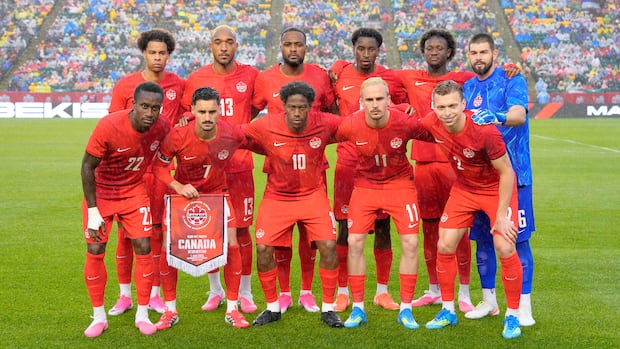
Jonathan Osorio and Jayden Nelson scored as Canada blanked Uzbekistan 2-0 in an international friendly in Edmonton.
For the first time, he is also facing the scrutiny that accompanies heightened expectations: being questioned about his rigid tactics, his attacking frustrations, his player selections, and his noticeable favoritism toward certain individuals. Despite his significant accomplishments with the program, pressure can transform fans’ perspectives as well.
After a practice on Monday, his notably brief interaction with reporters — lasting just two minutes and 28 seconds — included a pointed remark: “I felt it was a productive training session,” he stated. “We created numerous opportunities near the goal. Thus, we should score more goals, so I won’t have to deal with any more ridiculous questions from you all.”
He delivered this with a half-smile, hinting that he was partially serious.
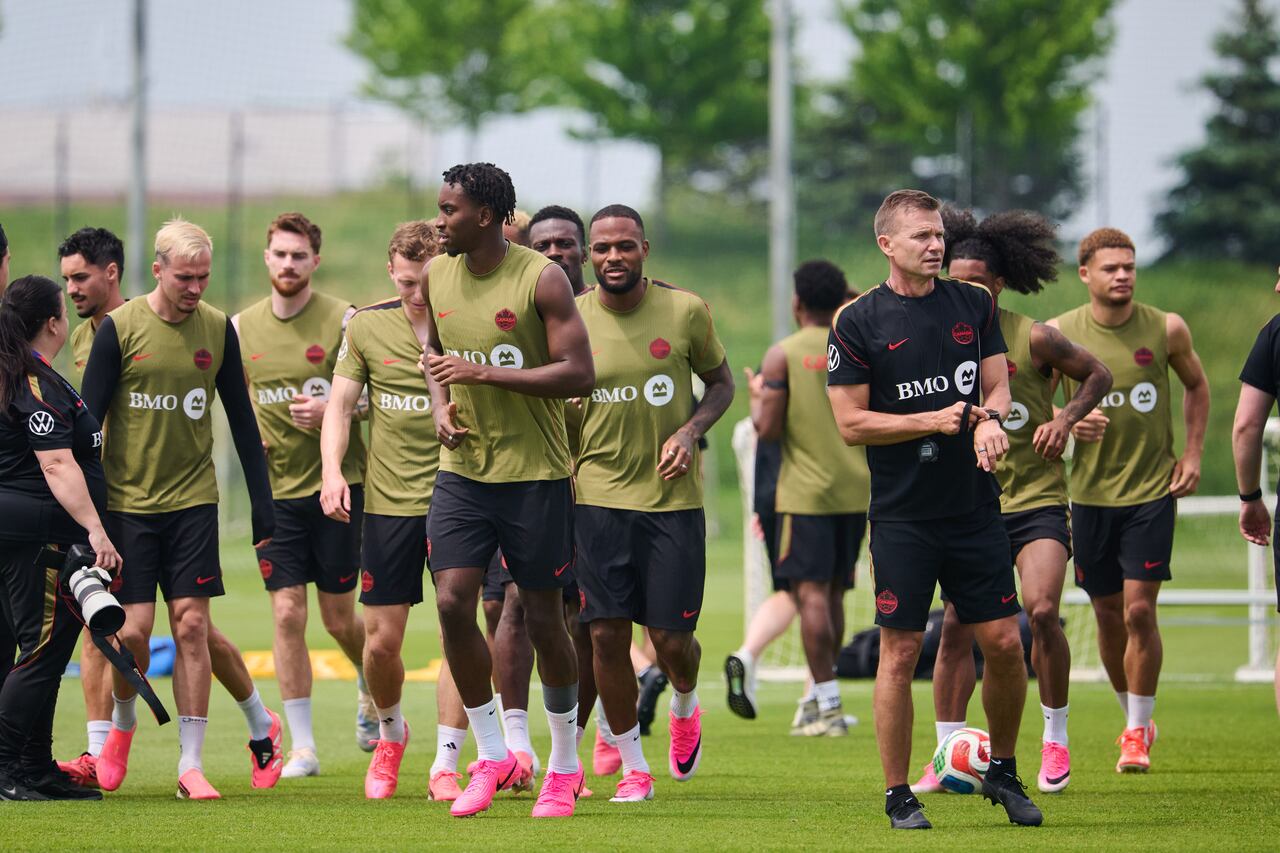
Canada head coach Jesse Marsch leads a training session Tuesday in Toronto. (The Canadian Press)
Shortly thereafter, Richie Laryea, one of the players most accustomed to this environment, approached the added attention with a more laid-back attitude.
“I’m just continuing my regular daily routine,” he mentioned. If he noticed any change in his day-to-day life, it was the police escort from the team’s downtown hotel to the training facility. Accompanied by nearly two dozen motorcycle officers, the bus ride only took 25 minutes.
“That’s something that never happens,” he remarked.
This experience is one that these players will never encounter again. Perhaps it is someone like Jayden Nelson, the team’s unexpected newest addition, who can serve as a reminder of how significant this tournament is for them all. After being told he was off the roster, he learned he was back on it. “I approached every session, every fitness evaluation, as if it were my last,” he shared.
A lesson from previous World Cups — such as Spain’s triumph in South Africa or Morocco’s enchanting journey in Qatar — emphasizes the importance of embracing the extraordinary nature of the event and sharing the joy of being present with loved ones. The World Cup transcends being just another tournament. Friday’s home opener will be more than just another game. To downplay the moment would be a disservice to its significance.
The more unlikely the dream, the more worthy it is to celebrate when it ultimately becomes a reality.