

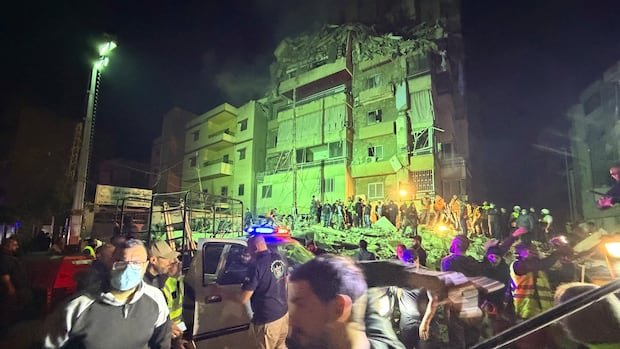

Israel conducted an airstrike in Beirut on Wednesday, marking the first attack since the ceasefire agreement with Hezbollah last month. The strike targeted a commander of Hezbollah’s elite Radwan force in the southern suburbs of the city, as confirmed by Israeli Prime Minister Benjamin Netanyahu and Defence Minister Israel Katz. While Israeli media reported the commander’s death, there was no immediate verification from either the Israeli military or Hezbollah.
The ceasefire in Lebanon has played a crucial role in the broader truce between the United States and Iran, with a cessation of Israeli strikes in Lebanon being an important Iranian stipulation. Despite talks progressing towards a potential deal between Iran and the U.S., the recent strikes risk destabilizing the ceasefire that halted Israeli assaults on Beirut. Israeli forces have maintained their presence south of the Litani River, with ongoing strikes in southern Lebanon.
In retaliation, Hezbollah, a key ally of Iran, has responded by launching armed drones and firing at Israeli soldiers. Israel issued evacuation orders for several villages north of the Litani River earlier on Wednesday, possibly expanding its operational zone. Discussions between Israel and Lebanon have primarily occurred at the ambassadorial level, with Lebanese Prime Minister Nawaf Salam mentioning that high-level meetings between the two countries are premature at this stage.
The ceasefire extension was announced on April 23 by U.S. President Donald Trump, who expressed optimism about hosting Netanyahu and Aoun soon, hinting at a potential peace agreement. Salam clarified that Lebanon’s goal is peace rather than normalization with Israel, emphasizing the need for a timetable for Israel’s withdrawal and efforts to control weapons under state authority to disarm Hezbollah.
Aoun echoed similar sentiments, stressing the necessity of a security agreement and a halt to Israeli attacks before considering a meeting with Netanyahu. Israel has established a self-declared security zone in southern Lebanon to safeguard its northern regions from Hezbollah threats. The conflict has resulted in casualties on both sides, with the Lebanese Health Ministry reporting over 2,700 deaths since the conflict began on March 2.