

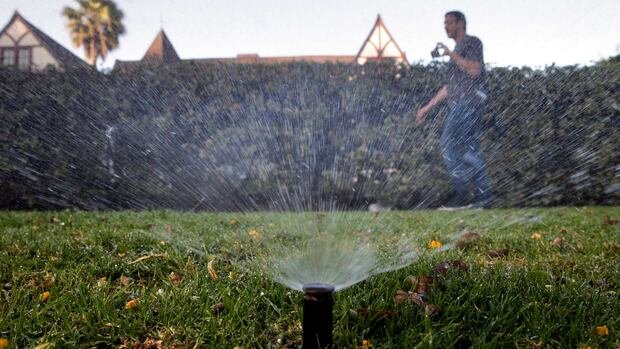

Mandatory water restrictions have been put into effect for residents and businesses within the Greater Vernon Water (GVW) service area. Imposed by the Regional District of the North Okanagan, these restrictions prohibit non-essential water activities such as lawn watering and filling private pools. Individuals are urged to reduce their overall water consumption by 50%, both indoors and outdoors. Moreover, farmers in the vicinity must decrease their water usage by 70% on their agricultural lands.
Zee Marcolin, the general manager of utilities at the regional district, stated that the water supply for farmers is currently at half of its normal level. These restrictions will impact individuals in Vernon, Coldstream, parts of Spallumcheen, and all those connected to the Greater Vernon Water supply. Failure to comply with the restrictions may lead to fines, with repeated non-compliance resulting in water supply disconnection.
The mandatory restrictions are a response to depleted water reservoirs, low snowpack, ongoing drought conditions, and exceptionally high water demands. Marcolin warned that if current water usage rates persist, critical creeks could run dry by August.
Fruit growers in the region expressed concerns over their ability to sustain crops under such stringent water constraints. Deep Brar, president of the B.C. Fruit Growers’ Association, emphasized the importance of managing the remaining water supply to safeguard long-term food production and prevent orchard damage. He highlighted the irreversible impact on fruit trees, stressing the lengthy recovery process should they perish.
Acknowledging the severity of the water shortage in the Vernon area, growers are advocating for a comprehensive mitigation strategy. The Syilx Okanagan Nation declared a watershed emergency in May, calling for swift action from provincial and regional authorities. Jordan Coble, a council member of the Westbank First Nation and chair of the natural resource committee with the Syilx Okanagan Nation Alliance, emphasized the critical water scarcity in the region due to consecutive years of low snowpack and severe drought conditions.
Snowpack levels in the Okanagan region are reported to be below average according to B.C.’s Ministry of Land, Water, and Resource Stewardship, with many areas receiving less than half of the typical snow accumulation.