


A provision within the Income Tax Act, aimed at supporting family farms, is being challenged by some farmers in southern Ontario who argue that the law is outdated and needs revision. The provision requires new farm owners to declare the farm as a capital gain and pay taxes on it as part of their income taxes when there is a change in ownership. Steve Cooper, a cattle farmer in Uxbridge, Ontario, highlights the significant impact of these capital gains tax bills, particularly when the farm transitions ownership within the family.
Cooper emphasizes the financial burden imposed by the tax bills, stating that it could amount to millions of dollars, hindering young farmers from continuing operations without significant changes. Under the current legislation, when farms are passed down to a child, the child can defer paying capital gains tax on the inherited business as long as the property continues to be used as a farm. However, nieces and nephews are not eligible for this tax deferral when inheriting family farms.
Advocates, including Cooper and farmers nationwide, are urging the federal government to broaden the deferral criteria to include nieces and nephews, recognizing that farm succession now extends beyond immediate family members. The farming industry has experienced a decline, with approximately 57,000 farms closing or consolidating between 2001 and 2021, representing a 23% decrease over two decades, as reported by the National Farmers Union.
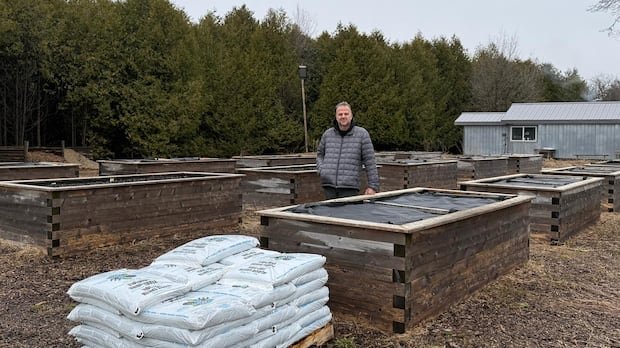
Derryn Shrosbree, a vegetable farmer in Mount Forest, Ontario, has been championing this cause, attributing the loss of farms to outdated tax regulations. Shrosbree stresses the need for inclusivity by adding nieces and nephews to Section 73(3) of the Income Tax Act to prevent further closures in the agricultural sector. He underscores the evolving farming landscape, noting a decrease in the number of individuals available or willing to engage in farming practices.
The escalating costs of farming in Canada, exacerbated by increased prices for fertilizer and diesel due to global conflicts, further compound the challenges faced by farmers. Shrosbree warns that unless addressed, the situation could lead to significant financial strain during the fall harvest. The federal finance department, when questioned about potential amendments to the Income Tax Act, stated that while tax rules are continuously reviewed for fairness, they cannot comment on forthcoming changes.
Cooper, who operates a diversified farm in Uxbridge, anticipates potential tax issues for his family farm in the coming years. Concerned about the impact on his nephew, the likely successor, he highlights the disparity in tax treatment based on familial relationships and active involvement in farm operations. Despite the obstacles, Shrosbree remains optimistic, hosting events to inspire and connect young farmers and advocating for amendments to the Income Tax Act to facilitate intergenerational farm transfers and uphold the resilience of Canada’s agricultural sector.