

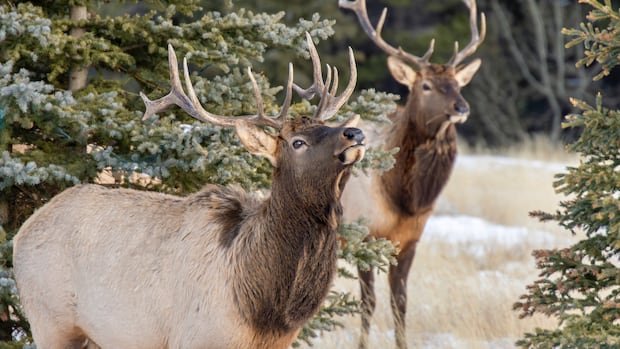

Amidst vibrant orange larch trees, a resounding call resonates through the Bow Valley. As the autumn mating season is in full swing, male hoofed mammals throughout North America are vying for the opportunity to breed. This competition includes elk, a familiar sight in many parts of Alberta. It is not unusual to witness – and hear – bull elk asserting their dominance in the Canadian Rockies during this period.
Although the iconic bugle call may evoke a similar chilling effect on human ears across the continent, recent research from the United States indicates that elk in various regions may actually be communicating through distinct dialects. Jennifer Clarke, a biology professor at the University of La Verne in California, conducted a study on elk populations in Colorado, Pennsylvania, and Wyoming. These populations, separated for extended periods, have developed unique communication traits akin to isolated human populations.
Elk bugling serves as a signal of aggression, with males using it to announce their presence and readiness to confront challengers. The bugles can also convey information about an elk’s age and size, with younger bulls emitting “squeaky” calls compared to the resonant bugle of dominant mature males. Despite these findings, the precise reasons for the regional dialect variations remain unclear.
Clarke’s team originally hypothesized that habitat differences among the elk populations might influence their vocalizations. However, the study revealed that the Pennsylvania elk, residing in dense deciduous forests, did not exhibit more pronounced dialect differences compared to elk in Wyoming and Colorado, which inhabit more open and arid environments. This discrepancy suggests that other factors, such as genetics or learning, may contribute to the distinct elk dialects observed.
Regarding Canadian elk, Clarke refrained from speculating on potential dialect variations, emphasizing the need for further research. With the elk rut currently underway in the Canadian Rockies, caution is advised due to the heightened aggression and unpredictability of bull elk during this period. A study examining wildlife encounters in Canadian national parks revealed that elk were involved in the majority of aggressive interactions, underscoring the need for vigilance when in elk-populated areas.
Nick de Ruyter, program director of the BioSphere Institute’s WildSmart program, cautioned that male elk are particularly aggressive towards anything that encroaches on their territory during the rut. To mitigate conflicts, individuals are advised to maintain a safe distance from elk, especially in areas frequented by residents and tourists. During elk rutting season, it is crucial to give these animals ample space to prevent potentially dangerous encounters.
In conclusion, understanding the intricacies of elk communication and behavior is essential for ensuring human and wildlife safety in regions where elk populations are prevalent. By respecting these majestic animals’ space and natural behaviors, visitors can enjoy the beauty of the Canadian Rockies while minimizing the risk of negative interactions.