

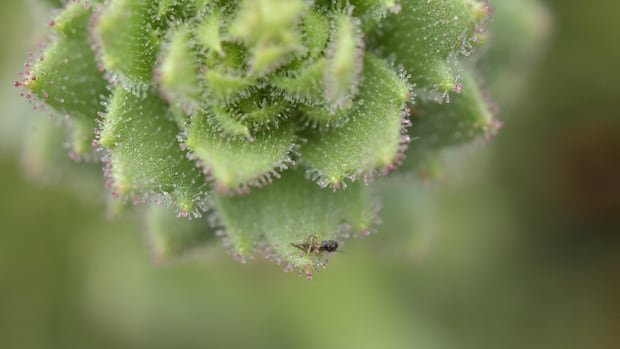

In a recent study, scientists have confirmed the carnivorous nature of a seemingly harmless flowering plant called Saxifraga candelabrum, located in southwestern China. This discovery, published in the journal Nature Communications, validates Charles Darwin’s suspicions from 151 years ago about predatory behavior within the Saxifraga genus.
The plant, covered in tiny sticky hairs that attract insects with a sweet scent, traps and consumes unsuspecting prey. Darwin’s initial observations of insects stuck on European Saxifraga plants in 1875 hinted at their carnivorous potential, a theory now proven through modern laboratory methods.
By feeding fruit flies enriched with nitrogen, researchers demonstrated the plant’s need for this nutrient, crucial for survival in nutrient-poor mountain environments. The evolution of sticky hairs on plants like Saxifraga candelabrum possibly began as a defense mechanism against seed predators, eventually leading to the exploitation of insects for nutrients.
Despite the need for nutrients, carnivorous plants like Saxifraga candelabrum have developed mechanisms to avoid trapping essential pollinators. This study suggests there may be more undiscovered carnivorous plants, including within the Saxifraga genus, waiting to be revealed.
With over 630 known carnivorous plant species worldwide, each showcasing unique predatory adaptations, the fascination with these botanical killers continues. From Venus flytraps to pitcher plants, these plants exhibit diverse methods of capturing prey, highlighting the intriguing world of plant carnivory.