

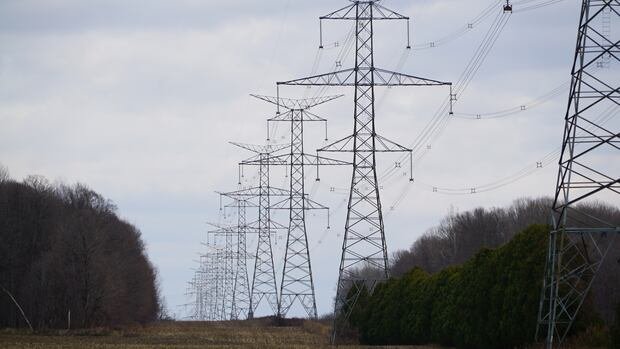

In CBC Sudbury’s ongoing series on addressing electricity needs in northern Ontario, concerns are arising over Ontario’s expedited development of a key transmission line between Barrie and Sudbury and its potential environmental repercussions.
Brennain Lloyd, a representative from Northwatch, an environmental advocacy group, questions the environmental impact of the proposed 500-kilovolt transmission line by Hydro One. Lloyd highlights concerns about potential effects on wetlands, lakes, wildlife habitats, and endangered species, emphasizing the need for a clear justification before proceeding with the project.
Scheduled for construction initiation in 2029 and full operation by 2032, the transmission line has been prioritized by the province to meet escalating electricity demands, support northern industries, and fortify the power grid. The project entails a 290-kilometer route from the Hanmer transformer station in Greater Sudbury to the Essa transformer station near Barrie, alongside another 230-kilovolt line between Dryden and Red Lake in northern Ontario.
While acknowledging the necessity of enhancing energy infrastructure ahead of demand spikes, Energy and Mines Minister Stephen Lecce assures that the project will undergo stringent environmental assessments to safeguard natural resources. Lecce underscores the importance of proactive planning to avoid electricity shortages and stresses the need for sustainable energy solutions to meet the region’s growing demand.
Hydro One, the utility responsible for the transmission line, has committed to a thorough environmental assessment process that includes public input and community engagement. Consultations with stakeholders have raised concerns about potential impacts on snowmobile trails, cottage areas, Indigenous rights, wildlife, and critical habitats, prompting assurances from Hydro One regarding adherence to the Class Environmental Assessment (CEA) for Transmission Facilities and a transparent planning process.
As the project progresses, environmental consultants will conduct field studies to identify the preferred route, considering technical, socio-economic, and environmental factors. The utility plans to continue engagement and data collection, culminating in a draft environmental study report for public review and feedback. However, environmental advocates like Lloyd and Peter Beckett emphasize the need for robust scrutiny and route planning that minimizes disruption to natural ecosystems and endangered species like turtles that inhabit the region.
Amidst the balancing act between economic development and environmental conservation, Ontario aims to achieve 99% non-emitting electricity by 2050 through expanded hydroelectric and nuclear power sources, aligning with its commitment to a greener future.