

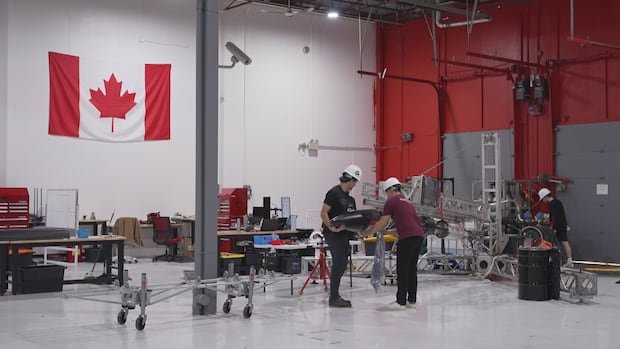

Canada, as the sole G7 nation lacking its own rocket launch capabilities, is keen on establishing a Canadian-made rocket. Several Canadian companies are in a race to provide the country with its own access to space, amid concerns that SpaceX might reduce its launch services. These rocket companies are facing challenges due to high costs, tight deadlines, and shifting government priorities.
Since Canada lacks the ability to launch rockets domestically, customers in the country rely on external providers, mostly American ones like SpaceX. These satellites are crucial for various purposes such as telecommunications, military applications, and earth observation.
To address this issue, the Canadian government has recognized space as a key sovereign capability and introduced legislation to enable launches from Canadian soil. Recent funding initiatives have supported three Canadian companies, including NordSpace, Reaction Dynamics, and Canada Rocket Company, in developing rocket capabilities by 2028.
NordSpace, founded in 2022, aims to launch satellites and develop rockets by conducting suborbital tests. Reaction Dynamics has been working on unique engine designs since 2017. Canada Rocket Company, established in late 2025, is focused on building a medium-lift rocket powered by methalox-fueled engines.
Private and public investments are crucial for these companies to overcome funding challenges and achieve their goals. SpaceX’s plans to phase out its Falcon 9 rocket and transition to a larger vessel called Starship have raised concerns among satellite customers. This transition could create opportunities for emerging rocket manufacturers like those in Canada.
As these Canadian companies work towards launching their rockets, they face long-term challenges that require substantial funding and testing. The industry experts emphasize the importance of sustained financial support to achieve successful launches and establish a consistent space launch capability from Canada.