

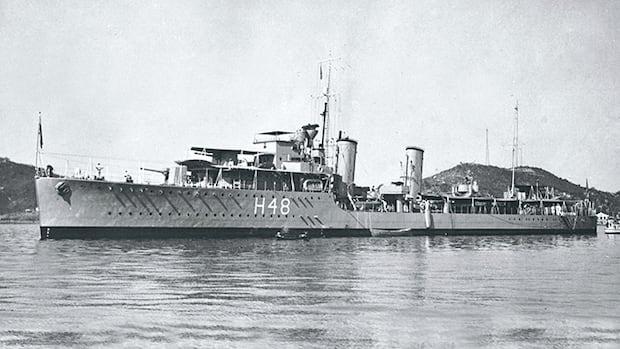

During the keel-laying ceremony for Canada’s inaugural River-class destroyer on Friday in Halifax, Vice-Admiral Angus Topshee’s remarks could have easily echoed the legacy of the ship after which HMCS Fraser is named.
“We have always been a destroyer navy, a navy that has small ships capable of doing big things anywhere that Canada needs them to go,” he stated.
In 1940, just prior to the original HMCS Fraser becoming the first Royal Canadian Navy vessel to be sunk in the Second World War, it played a role in the evacuation of British and Allied troops from France as German forces rapidly advanced.
“It’s a fascinating bit of history,” remarked Jeff Noakes, a historian specializing in the Second World War at the Canadian War Museum in Ottawa.
According to Noakes, the Royal Canadian Navy had very few ships during the 1920s following significant budget cuts, which led to a pressing need for rearmament in the 1930s.
Acquisition of the first HMCS Fraser
“The 1930s also coincided with the Great Depression,” he pointed out. “There isn’t much funding available for anything or anyone.”
Canada gradually obtained both new and used vessels during this time.
In 1936, the Royal Navy’s HMS Crescent was sold to Canada and rebranded as HMCS Fraser.
Originally stationed on the West Coast, HMCS Fraser moved to Halifax following the onset of the Second World War in 1939.
Noakes noted that it performed convoy escorts and coastal patrols, but after Germany’s assault on Western Europe in May 1940, Canada dispatched its modern destroyers, including HMCS Fraser, to the U.K. to strengthen defenses.
As France was on the brink of surrendering to German forces in June, evacuations of British and other Allied troops were occurring along the French coastline—not solely at Dunkirk.
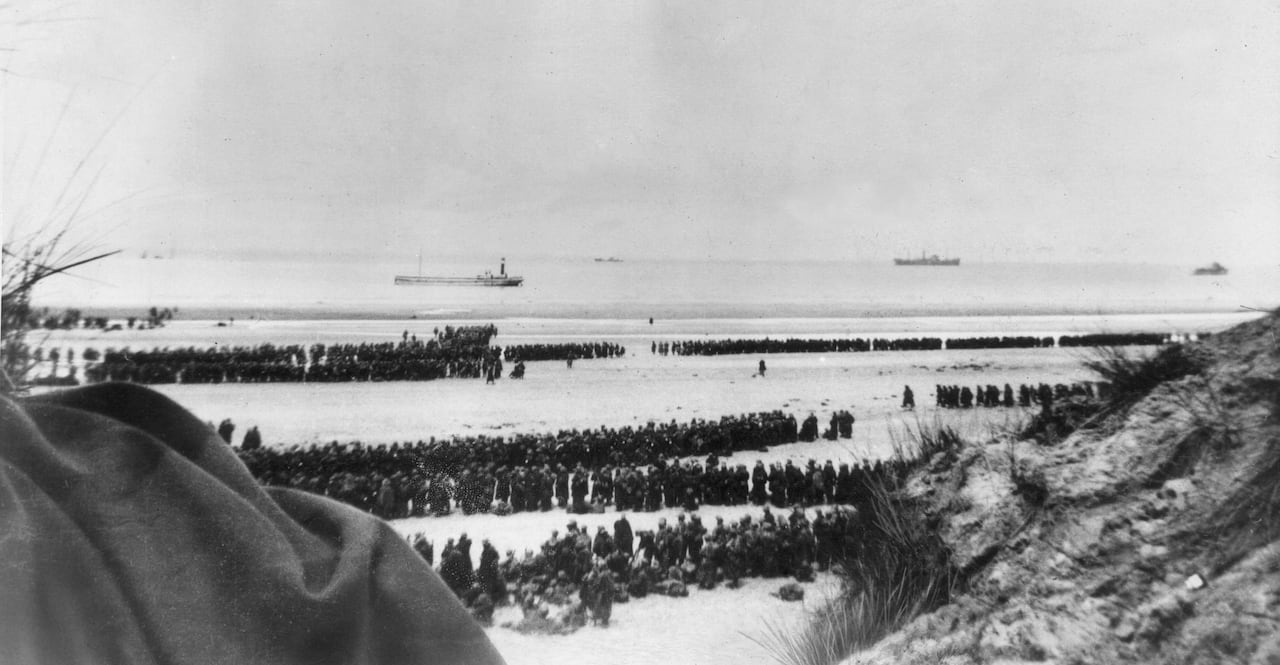
This undated photo, taken in May or June 1940, depicts British Expeditionary Forces and French troops awaiting evacuation from the beach at Dunkirk, France. (Topical Press Agency/Getty Images)
On June 21, HMCS Fraser was positioned in Saint-Jean-de-Luz, France, near the Spanish border, alongside another Canadian destroyer, HMCS Restigouche, and several British vessels.
“For the subsequent days, Restigouche and Fraser were part of the force stationed off Saint-Jean-de-Luz, providing protection against potential German submarine or other attacks while the ships’ boats transported evacuees from the port to vessels waiting offshore,” explained Noakes.
On June 25, the ships were forced to retreat, according to Noakes. Fraser, Restigouche, and a British vessel, HMS Calcutta, moved north along the French coast.
He mentioned that some accounts suggest the ships were on their way to assist a French merchant vessel to prevent it from entering an occupied French port where it would be captured.
Just after sunset, Fraser, Restigouche, and Calcutta were adjusting their formations.
“It’s a complicated situation,” Noakes stated. “The crews had been working tirelessly for days to evacuate as many people as possible.”
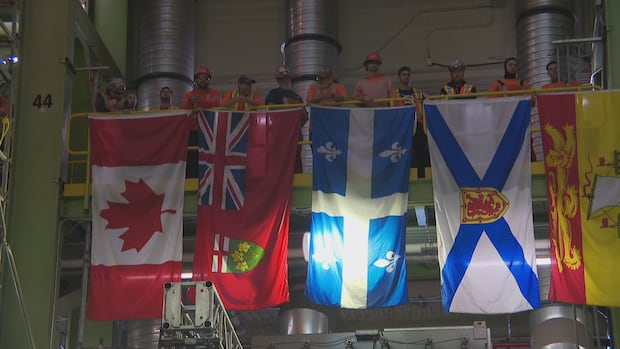
The ceremony at Irving Shipyard marked the official start of construction on what will become HMCS Fraser. The CBC’s Ben Dornan was there for the centuries-old tradition.
During the maneuvering, HMCS Calcutta collided with the front section of HMCS Fraser, resulting in the bow of Fraser breaking off and sinking in the Gironde River estuary.
Noakes reported that 47 crew members from HMCS Fraser lost their lives, many of whom were Canadian, while some were rescued from the portion of the ship that briefly remained afloat or from the water.
He noted that a section of HMCS Fraser’s bridge ended up on the bow of HMS Calcutta, allowing five individuals to step off that piece onto the Calcutta.
“The first loss of a Canadian warship in the Second World War was due to an accident rather than enemy action,” Noakes pointed out.
Many of the survivors from the Fraser’s crew were transferred to HMCS Margaree, which effectively took over the duties of the Fraser.
In October 1940, Margaree was lost following another collision at sea.
A sailor’s journey
Frank Crossley’s father, Sid Crossley, served on HMCS Fraser but not on HMCS Margaree. He believes his father suffered from post-traumatic stress disorder partly due to his experiences on Fraser.
“That’s another aspect of his consciousness, you know, all his mates who survived the Fraser but tragically perished on the Margaree,” Crossley reflected.
He mentioned that his father was involved in sonar operations throughout his 25-year military career and was likely present on the bridge of Fraser during the collision with Calcutta.
He described his father as possessing a dual personality, struggling with alcohol dependency.
“[It] might have helped if he and I could have discussed what he went through,” Crossley said.
A second HMCS Fraser served Canada for approximately 40 years until 1997, when it reached Bridgewater, N.S., to operate as a floating museum. Ultimately, the vessel was reacquired by the military and eventually dismantled.
‘A legacy to build from,’ states naval historian
At the ceremony in Halifax on Friday, a symbolic coin was affixed to the keel of the new Fraser. This tradition is meant to bring good fortune to the ship and its crew.
Freelance naval historian Roger Litwiller noted that it is not uncommon for navies to reuse ship names.
“It provides the sailors serving on the ship with a legacy to build from, something to take pride in, and it carries forward the history of not only the ship but also the Royal Canadian Navy from the past into the future,” he remarked.
MORE TOP STORIES
-
Reopened trail to popular Cape Breton waterfall lacks mobility access, leaving veteran disappointed
-
New Canada Post stamp celebrates Halifax 2SLGBTQ+ history
-
‘Everything changed’: A wave of U.S. hockey talent is taking the QMJHL route
-
Voters urged to get engaged in newly created Acadian riding in northern Cape Breton
-
Nova Scotians ‘need to act now’ to prepare for drought, says minister