

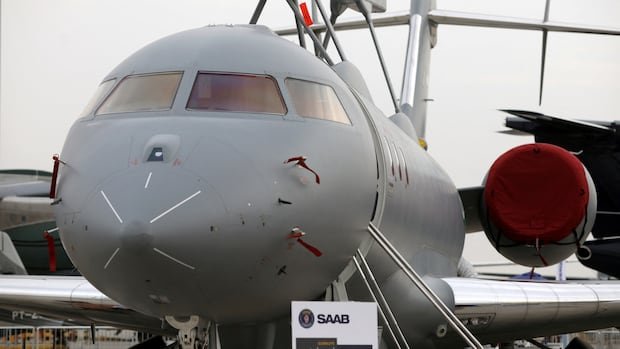

Canada’s potential acquisition of the Saab GlobalEye surveillance aircraft encounters significant political and technical challenges for seamless integration into NORAD. The success of this endeavor hinges on persuading the Trump administration and the Pentagon to share crucial technology facilitating communication between fighter jets and early warning systems while maintaining stealth capabilities.
Experts express skepticism that the U.S. would permit the installation of the Multifunction Advanced Data Link (MADL) – a technology exclusive to F-35 fighters – on the GlobalEye or potential Gripen-E aircraft if Canada opts for this fighter jet. The absence of MADL and related encryption technology could complicate and elevate risks in North American Aerospace Defence Command (NORAD) operations.
Amid discussions with Saab about integrating the GlobalEye into NORAD, Defence Minister David McGuinty acknowledges the complexity of this technical matter. Prime Minister Mark Carney recently revealed Canada’s negotiation with Saab to acquire the GlobalEye system, chosen over Boeing’s E-7 Wedgetail and the U.S.-Israeli L3-Harris-Elta Systems Aeris X models.
The Royal Canadian Air Force emphasizes data exchange concerns for interoperability with allies, particularly the United States within NORAD. While Saab asserts GlobalEye’s NORAD compliance, technical integration challenges persist but are deemed surmountable.
The significance of MADL technology in stealth aircraft like the F-35 is debated among experts. The use of legacy systems jeopardizes stealth capabilities by potentially revealing aircraft positions. Efforts to bridge different communication systems may involve substantial costs and development time.
The U.S. has never shared MADL technology with non-American entities, necessitating convincing the Trump administration for full integration of GlobalEye and possibly Gripen-E aircraft. Challenges lie in the current political climate between Canada and the U.S., with reservations about MADL sharing with non-partner nations.
While the U.S.-made F-35 utilizes secure communications, older platforms lack such capabilities, potentially compromising stealth advantages. Integration complexities and the reluctance to share advanced technology with non-U.S. entities pose hurdles in enhancing NORAD operations.
In conclusion, navigating technical, political, and operational considerations is imperative for Canada’s pursuit of acquiring advanced surveillance aircraft and ensuring seamless integration into shared defense systems.