

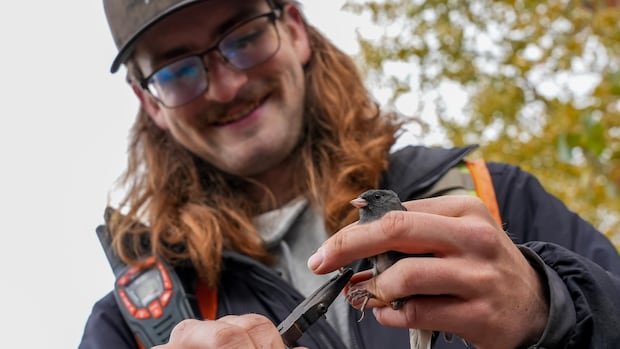

In the midst of the boreal forest, Ethan Denton, a Calgary-based bird researcher temporarily stationed in Fort McMurray, Alberta, carefully bands a dark-eyed junco, a small grey songbird, near a series of nets. Using pliers, Denton secures an aluminum band with a unique ID on the bird’s right leg after noting its gender and measurements. This tagging process aids researchers in tracking the junco’s migration routes across North America.
Ken Foster, a co-founder of the Wood Buffalo Wildlife Research Institute (WBWRI), oversees the operation, emphasizing the importance of long-term bird monitoring in the oilsands region. Recognizing a general decline in bird populations, Foster highlights the significance of identifying and addressing factors contributing to this trend.
While bird research in the oilsands region is not new, the WBWRI, established in 2024 by Foster and his wife Christine Godwin, aims to provide a sustainable platform for ongoing wildlife studies. Through the institute, volunteers engage in citizen science initiatives, contributing valuable data to understand bird behavior and population trends.
Foster’s research reveals varied responses among bird species to habitat changes in the oilsands region. Certain songbirds like the least flycatcher and northern waterthrush have experienced significant declines, attributed to environmental alterations along their migration paths. In contrast, adaptable species such as clay-coloured sparrows thrive in disturbed habitats, showcasing resilience in reclaimed areas.
Collaborating with energy companies, the WBWRI seeks to expand its research projects to enhance public engagement and educational outreach. Foster’s efforts have garnered interest from aspiring bird enthusiasts like Ryan Campbell, who gained a newfound appreciation for avian ecology through his internship with the institute.
Researchers like Erin Bayne from the University of Alberta emphasize the importance of local studies like Foster’s in identifying regional bird population shifts. By integrating local data with national databases, researchers can pinpoint challenges and advocate for conservation efforts to protect vulnerable species.
Beyond bird banding initiatives, the WBWRI plans to deploy automated tracking systems to monitor wildlife movements and assess bat populations in the region. Foster envisions a future where volunteers are trained to assist in the rehabilitation of injured wildlife, further solidifying the institute’s commitment to wildlife conservation and community involvement.