

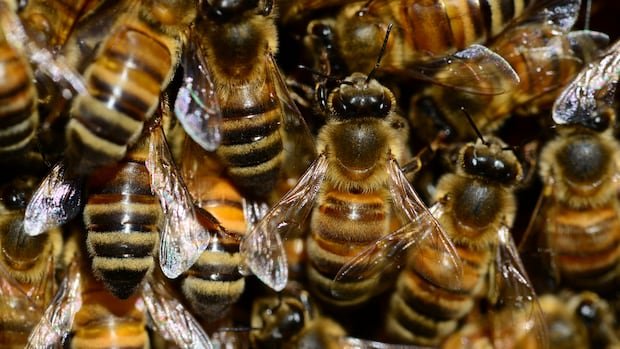

Canada’s frigid climate presents challenges for beekeepers, as highlighted in a 2025 report by the Canadian Association of Professional Apiculturists, which revealed that more than 41% of honeybee colonies in Alberta did not survive that winter. In response to this issue, Beekeeping Innovations Ltd., based in the Calgary area, has introduced a groundbreaking solution known as the Bee Cube. This innovative apiary features a fully climate-controlled environment capable of accommodating multiple honeybee colonies and was developed in Okotoks.
Herman Van Reekum, the founder and CEO of the company, explained that the primary objective of the Bee Cube is to ensure bees can endure the winter in a comfortable setting. Moreover, beyond aiding bees in surviving harsh winters, the Bee Cube offers a unique opportunity to revolutionize Canada’s beekeeping sector.
Van Reekum emphasized the significance of the Bee Cube in facilitating the production of queens in a safe and cost-effective manner. By breeding queens in large numbers domestically, the company aims to reduce the reliance on importing foreign queen bees. Currently, Canadian beekeepers heavily depend on importing approximately 300,000 queen bees annually from warmer regions such as Australia, New Zealand, California, and Hawaii. Van Reekum cautioned against the risks associated with introducing foreign bees, citing the potential threat of harmful pests like varroa mites.
Another looming danger highlighted by Van Reekum is the Tropilaelaps mite, which has not yet invaded North America but has been detected in honeybee colonies in other continents. To mitigate these risks, the focus is on establishing a local source of queens to enhance bee resilience and survival rates in the Canadian climate.
The process of queen production involves careful selection and nurturing of larvae with royal jelly to develop into queen bees. To scale up queen production, queen cells are transferred from one hive to a queenless colony. The emergence of new queens is monitored closely to prevent conflicts within the hive. Once mature, the queens are introduced to their colonies, where they mate with drone bees and start laying eggs to establish new hives.
Van Reekum highlighted the importance of producing resilient queen bees that can pass on strong genetic traits to their offspring, enhancing their ability to withstand Canadian winters. The company’s goal is to significantly increase queen production to bolster the local beekeeping industry.
Canada’s honey industry, valued at $241 million in 2025, plays a vital role not only in honey production but also in providing essential pollination services to farmers, contributing significantly to the agricultural sector. Van Reekum emphasized the crucial role of bees in pollinating crops, stating that a third of the food people consume is made possible by bees pollinating various crops such as canola, orchards, and blueberries.
With Alberta being home to nearly 40% of Canada’s bee colonies and serving as the country’s largest honey producer, the innovative solutions offered by Beekeeping Innovations Ltd. have the potential to reshape the beekeeping landscape in Canada.