

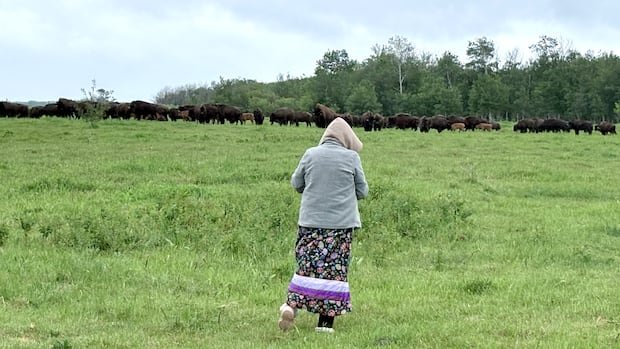

A ceremony was held by Métis leaders in the Batoche area to name 16 new calves in the Batoche bison herd, with Michif language students in attendance. These calves mark the first bison births in the region in almost 150 years, as shared by Métis elders with students from St. Louis, Duck Lake, and Bellevue in Saskatchewan. Earlier this year, students from various parts of the province were invited to participate in naming the calves.
In a collaborative effort in 2023, Métis Nation—Saskatchewan (MN-S) teamed up with Parks Canada to relocate 25 yearlings from Grasslands National Park to Batoche. An additional 50 bison were added to the herd last year. This initiative aimed to reintroduce bison to Métis Nation-Saskatchewan lands around Batoche.
The excursion provided students with a hands-on learning experience about Métis culture through land-based education, according to Darcy Lepowick, MN-S minister of environment, agriculture, lands, and resources. Witnessing the buffalo in their natural habitat allowed the students to engage with Métis history in a tangible way, fostering a deeper understanding of the significance of the buffalo herds to the Métis community in the area.
The calves were given names reflecting the northern, heritage, and French dialects of Michif, such as “Chiraan” (Northern Light), “Toneur” (Thunder), “La ci flesh” (Little Arrow), and “Li pchi” (The Little One). Notably, one calf was named “Groos tet,” which translates to “Big Head” in English, eliciting positive reactions from students like Samantha Campbell, a Michif language student at St. Louis Public School.
After the naming ceremony, attendees, including students and observers, ventured into the bison paddock to have a closer look at the herd. Angela Rancourt, a Michif language teacher, emphasized the significance of the event in connecting the community with their heritage and land. She highlighted the importance of using the Michif language in the naming process, allowing students to feel represented and engaged in their cultural heritage.
Looking ahead, as the bison herd grows, plans are in place to relocate some bison to establish new herds, as mentioned by Lepowick. The current herd is nearing its carrying capacity, with expectations of more calves being born next spring. These bison will serve as nucleus herds for other Métis groups and regions within the province in the future.