

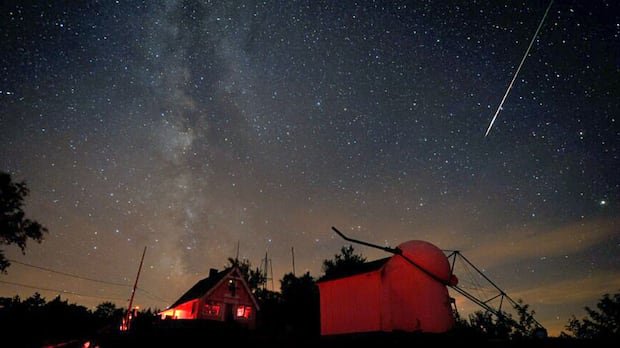

This August, skywatchers can look forward to the annual Perseid meteor shower, which is renowned for its abundance of bright meteors and favorable viewing conditions. Coinciding with the peak of the meteor shower is a partial solar eclipse on the same day.
The Perseid meteor shower, considered one of the best displays of the year, is set to peak on the night of August 12-13. This year’s shower is expected to be particularly exciting as Earth-grazers, fast and bright meteors, are anticipated to be plentiful. Skygazers are encouraged to head out early as sightings could start around 10 p.m. or even earlier.
With a new moon aligning with the peak night, the absence of moonlight will enhance visibility, allowing observers to potentially witness up to 120 meteors per hour. While the actual number seen may be lower due to varying conditions, the increased rate of meteors boosts the chances of catching a glimpse of these celestial phenomena.
The Perseid meteor shower began on July 17, steadily intensifying as it approaches its peak. Meteor enthusiasts are advised to check the weather forecast and consider observing a few days before the peak night if cloudy conditions are expected. Finding a dark location away from city lights and allowing time for eyes to adjust to the darkness can optimize meteor viewing.
In addition to the Perseids, other notable meteor showers like the southern delta Aquariids, alpha Capricornids, and kappa Cygnids are active, offering additional opportunities to witness shooting stars. Random sporadic meteors further contribute to the celestial spectacle, earning the season the moniker “meteor Christmas.”
On August 12, a partial solar eclipse will be visible from regions including Greenland, Iceland, Spain, and a small part of Portugal. While Canada won’t experience a total eclipse, viewers across the country may see the moon partially obscure the sun. Observers are reminded to use approved solar eclipse glasses for safe viewing of this rare astronomical event, which showcases the dynamic interaction of Earth, moon, and sun.
Both the Perseid meteor shower and the partial solar eclipse present captivating celestial events for skywatchers to enjoy this August.