

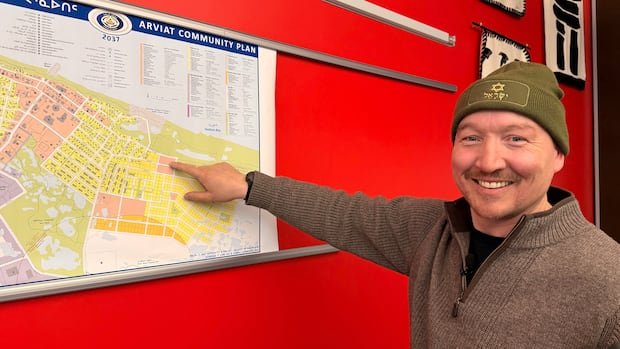

Big transformations are on the horizon for Arviat, Nunavut, as significant developments are set to unfold in the small community. Commencing this summer, a whopping 1,800 truckloads of gravel will be spread at the construction site in the hamlet, where plans are underway to erect the primary campus for Inuit Nunangat University (INU) alongside a student residence.
Time is of the essence as the inaugural group of students is slated to begin their studies at Canada’s first Inuit-led university by 2030. Expressing his enthusiasm, Joe Savikataaq Jr., Arviat’s mayor, highlighted the numerous benefits that this initiative will bring to the community. He emphasized the joy of witnessing local children being able to pursue higher education without having to leave their hometown.
Despite the opening still being four years away, a festive atmosphere enveloped Mark Kalluak Hall on Thursday as the community gathered to celebrate Arviat’s selection as the site for Canada’s premier Arctic university. The celebratory event featured a community feast showcasing traditional Inuit cuisine like fish and caribou, complemented by cultural performances including drum dances, games, and a square dance.
Notable figures, including Natan Obed, the president of Inuit Tapiriit Kanatami (ITK), graced the occasion, underscoring the significance of this milestone. Obed praised the long-awaited establishment of Inuit Nunangat University and highlighted the community’s pivotal role in the project’s realization.
The anticipation and excitement were palpable as Joe Karetak, an Arviat resident with a background in education, expressed his delight at the selection of his community as the university’s host. He emphasized the broader impact the university will have, not just on Arviat but on Nunavut, Canada, and potentially beyond.
With a population of approximately 3,200 residents in this remote community, Mayor Savikataaq anticipates a significant influx of around 500 individuals once INU is fully operational. This includes families, students, and faculty members. Obed emphasized that the university will start with a foundational year, known as the North Star Year, focusing on holistic development rooted in Inuit language, culture, and governance.
Arviat’s journey to becoming the home of INU began with a proactive response to an advertisement seeking proposals for the university’s location. Mayor Savikataaq detailed the community’s swift action in submitting a compelling proposal and garnering widespread support through community engagement efforts.
Following the shortlisting of Arviat by ITK, comprehensive planning and preparations were undertaken to showcase the community’s readiness for the university. The meticulous proposal addressed various aspects, including infrastructure, services, and cultural alignment, meeting all the criteria set by ITK.
Reflecting on the significance of Inuktitut language in Arviat, Obed emphasized the importance of building the university in a location where the language thrives. He highlighted the community’s strong cultural heritage and emphasized the university’s role in preserving and promoting Inuit traditions.
The financial backing for the university has been robust, with $160 million secured thus far through contributions from various partners. Obed acknowledged the pivotal role of these investments in realizing the vision of an Inuit-led university that celebrates and upholds Inuit culture and values.
As the first university in Canada’s Arctic and the inaugural Inuit-led institution in the country, INU represents a significant milestone for indigenous education. Inuit leaders have long championed the establishment of such a university, with Governor General Mary Simon hailing the progress made towards realizing this transformative initiative during her address at the United Nations Permanent Forum on Indigenous Issues.