

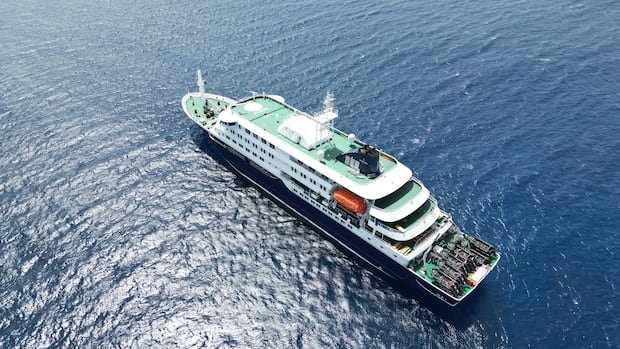

More Canadians are being contacted due to their presence on flights with a confirmed case of hantavirus, as reported by federal health authorities. Dr. Joss Reimer, Canada’s chief public health officer, revealed during a news briefing that 26 individuals who shared flights with a hantavirus case linked to the outbreak on the luxury cruise ship MV Hondius are being reached out to by local public health units.
These 26 individuals are deemed low-risk as there is no indication that they were in close proximity or had direct prolonged contact with the hantavirus case. The specific provinces where these individuals reside were not disclosed by Reimer. Public health officials are actively contacting these individuals to inform them of their flight exposure, educate them on symptoms to monitor, and ensure their monitoring during the at-risk period.
The flight connections involving these low-risk contacts include trips from St. Helena to Johannesburg and from Johannesburg to Amsterdam, as confirmed by a spokesperson from the Public Health Agency of Canada. The total count of Canadians associated with the hantavirus outbreak now stands at 36, encompassing nine high-risk contacts, six of whom were passengers on the affected ship.
Reimer emphasized that despite the growing number of identified individuals linked to the outbreak, the overall risk to the general public remains low. Notably, one individual who was previously classified as high-risk has now been reclassified as low-risk by federal health authorities.
High-risk contacts pertain to individuals who were on the cruise ship or had direct, prolonged interaction with a confirmed or suspected hantavirus case. Local health units have the authority to request self-isolation based on their risk assessments, as exemplified by Ontario instructing seven low-risk residents to self-isolate for 45 days.
In contrast, eight Quebec residents who were on the same flight as the hantavirus case are advised to self-monitor for symptoms without the need for self-isolation, according to Quebec’s director of public health, Caroline Quach. This decision is justified by the minimal contact these residents had with the confirmed case during the flight.
While other countries are conducting testing on MV Hondius passengers, Canadian health officials have opted to test only symptomatic individuals at present. Testing may be extended to asymptomatic individuals based on expert advice, considering the potential drawbacks of false-negative results leading to non-compliance with isolation measures.
In the United States, no confirmed cases of Andes hantavirus from the cruise ship outbreak have been reported. However, the U.S. Centers for Disease Control and Prevention is monitoring 41 individuals for possible infection, including those who returned before the outbreak was identified and those possibly exposed during flights with symptomatic cases.
Dr. David Fitter from the CDC’s hantavirus response team highlighted the importance of monitoring these individuals for six weeks, advising them to stay home and limit contact with others during this period. The University of Nebraska Medical Center confirmed the transfer of a passenger from a biocontainment unit to a quarantine unit after medical clearance.
Fitter mentioned during a media call that there have been no reported cases in the United States, emphasizing the ongoing vigilance despite the absence of confirmed cases.