

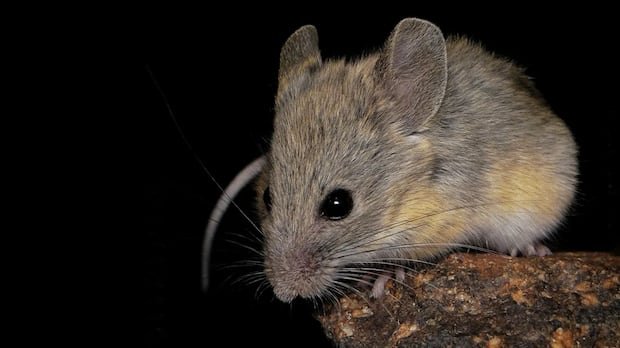

At the peak of a 6,739-meter Andean volcano, where the atmosphere is thin, temperatures remain consistently below freezing, and human survival is challenging, a small leaf-eared mouse has established its habitat by consuming poisonous plants. An international research team, including scientists from McMaster University in Hamilton, Ontario, has revealed some of the biological adaptations that enable this remarkable behavior. The study, recently published in the journal Science, demonstrates that high-altitude Andean leaf-eared mice possess the ability to generate heat more efficiently in low-oxygen environments. Genetic analysis also indicates that they have evolved to process toxic compounds found in their food.
The species, known as Phyllotis vaccarum, has been identified on the summit of Volcán Llullaillaco along the Chile-Argentina border. At such elevations, each breath provides only about 44% as much oxygen as at sea level. Grant McClelland, a biology professor at McMaster and one of the study’s co-authors, expressed astonishment at the mice’s survival under such harsh conditions, emphasizing the barrenness of the environment.
These mice exhibit the widest elevation range of any mammal, residing from sea level on Chile’s northern coast to peaks exceeding 6,700 meters in the Andes. Researchers collected specimens across this range, conducted genomic comparisons, and subjected both highland and lowland mice to identical laboratory conditions. Heat production was measured under simulated oxygen levels equivalent to sea level, 4,300 meters, and 7,000 meters. Despite a decrease in heat production with reduced oxygen levels, highland mice displayed greater heat-generating capacity compared to lowland members of the same species and a related lowland species, potentially offering a crucial advantage in freezing temperatures.
The muscle efficiency in highland mice is believed to contribute to their advantage in cold environments. Graham Scott, a co-author and biology professor at McMaster, highlighted the importance of muscle metabolism in sustaining body heat, likening it to the endurance required by marathon runners. Notably, the mitochondria in the hind-leg muscles of highland mice exhibited enhanced capacity to convert oxygen and nutrients into energy compared to those of lowland counterparts. Mitochondria, responsible for energy production within cells, were found to be more abundant and efficient in utilizing lipid fuels, which provide sustained energy for shivering.
A significant aspect of the study focused on the mice’s diet. Limited vegetation growth on the highest slopes necessitates the consumption of whatever is available, including plants with toxic compounds. Genetic analysis revealed adaptations in detoxifying genes, indicating the mice’s ability to cope with ingesting harmful substances. This remarkable survival strategy at nearly 7,000 meters serves as a testament to the resilience of life in extreme environments, challenging scientists’ perceptions of where life can thrive.
Grant McClelland emphasized the perpetual surprises of evolution, noting that life forms have a remarkable capacity to adapt and flourish in seemingly inhospitable environments across the planet.