

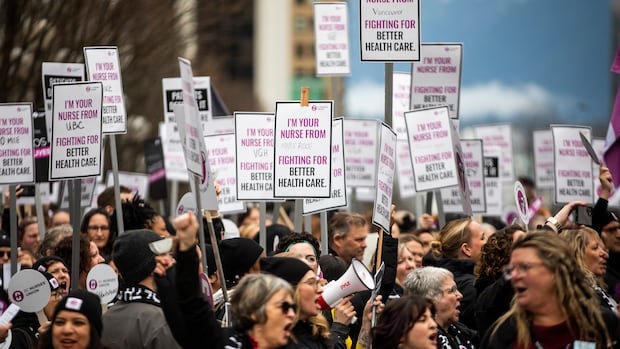

Nurses in British Columbia are on the verge of taking job action after an “overwhelming” strike vote during the weekend. The BC Nurses’ Union reported that more than 50,000 nurses voted with a staggering 98.2% in favor of job action after six months of negotiations. This strike mandate is the most robust in the union’s history.
Union president Adriane Gear emphasized the significance of the vote, stating that nurses in British Columbia are demanding respect, safety, and a fair contract. The primary focus of the union in the new contract negotiations is to minimize systemic risks, addressing issues such as unsafe staffing levels, workplace violence, and heavy workloads that nurses encounter.
While the vote outcome does not automatically trigger a strike, it grants nurses the legal authorization to take some form of job action while negotiations are ongoing. Gear acknowledged that nurses do not desire to be in this position but are ready to advocate for a secure and sustainable healthcare system that can retain the essential nursing staff patients rely on.
Negotiations between the union and the Health Employers Association of BC hit an impasse on April 20. The association, representing most publicly-funded health providers in BC, mentioned that negotiations have resumed to find mutually beneficial solutions that align with the government’s and employers’ key priorities.
Health Minister Josie Osborne informed that the province recently reached agreements with different health-care unions to ensure essential services in case of any job action. The strike vote occurs amidst a prolonged healthcare crisis in BC, with concerns raised by critics like MLA Anna Kindy about inadequate staffing leading to emergency department closures.
Opposition also surfaced from B.C. Green Party leader Emily Lowan, highlighting the need for minimum nurse-to-patient ratios negotiated with the union and criticizing the government’s spending on private nursing contracts. Lowan emphasized the importance of investing in existing nurses to enhance their working conditions and patient care.
The ongoing developments underscore the challenges faced by nurses in British Columbia and the critical need for addressing safety concerns and improving working conditions in the healthcare sector.