

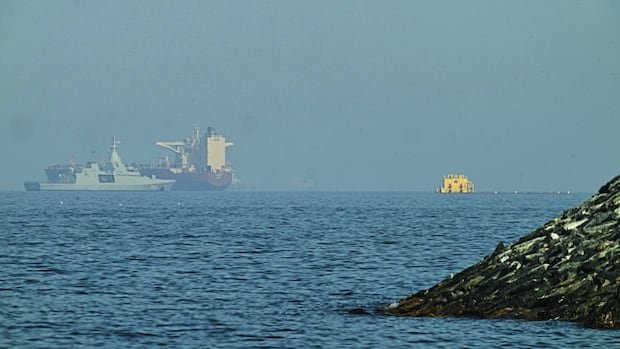

U.S. President Donald Trump has announced the initiation of a new initiative, “Project Freedom,” to assist stranded ships in departing the Strait of Hormuz. Trump expressed concerns over the repercussions of the Iran conflict on neutral nations, vowing to ensure the safe passage of affected ships out of the restricted waterways to resume their operations. The project is set to commence in the Middle East on Monday, with ongoing discussions between U.S. representatives and Iran aiming to foster positive outcomes.
The closure of the strait by Iran, following the conflict instigated by the U.S. and Israel, has significantly impacted global markets, leaving numerous vessels, predominantly oil and gas tankers and cargo ships, marooned in the Persian Gulf since the onset of hostilities. The situation has led to dwindling essential supplies such as drinking water and food for crew members, many of whom hail from South and Southeast Asian countries.
Trump emphasized the humanitarian aspect of the initiative, labeling it a gesture of goodwill towards the affected nations, including Iran. However, he cautioned against any interference with the humanitarian process, warning of necessary force if such actions occur. Iranian media outlets swiftly shared Trump’s statement, referring to it as a “claim.”
Moreover, recent reports highlighted attacks on cargo ships near the Strait of Hormuz, with one vessel encountering multiple small craft assaults and another being struck by unidentified projectiles. These incidents underscore the risks faced by ships navigating the region amidst escalated tensions. Although no injuries were reported in these attacks, they serve as a stark reminder of the volatile situation in the area.
Despite a fragile three-week ceasefire currently in place, both the U.S. and Iran remain engaged in negotiations to potentially end the conflict permanently. Iran’s latest proposal, aiming to resolve outstanding issues within 30 days, includes demands such as the lifting of U.S. sanctions, cessation of naval blockades on Iranian ports, withdrawal of forces from the region, and a halt to all hostilities, including Israel’s operations in Lebanon. Trump, while acknowledging the proposal, expressed skepticism regarding the likelihood of reaching a comprehensive agreement given historical grievances.
Efforts to de-escalate tensions continue, with Pakistan facilitating communications between the U.S. and Iran. Diplomatic engagements persist, with Iranian officials engaging in discussions with Omani counterparts, building on prior rounds of dialogue preceding the conflict. The situation remains fluid as stakeholders navigate a complex geopolitical landscape in the hope of securing lasting peace and stability in the region.