

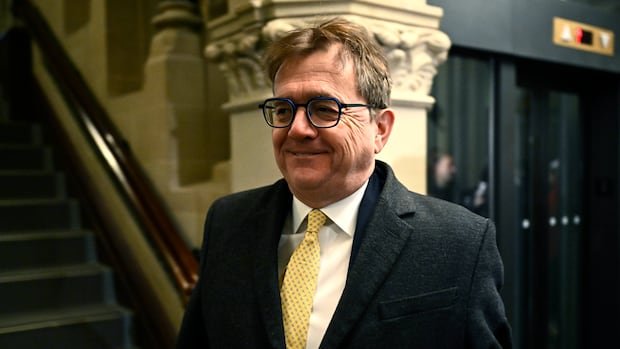

MP and former cabinet minister Jonathan Wilkinson has been appointed as Canada’s next ambassador to the European Union, confirmed Prime Minister Mark Carney on Thursday. Carney expressed confidence in Wilkinson’s capabilities, citing his extensive background in government, entrepreneurship, and business, and emphasized the importance of enhancing security, prosperity, and sustainability across the Atlantic.
The decision to assign Wilkinson to this role comes after speculation about his potential candidacy, as Canada has been without an ambassador to the EU since the recent past. The Prime Minister’s Office indicated that Wilkinson will assume his new responsibilities during the upcoming summer.
In acknowledging Wilkinson’s appointment, Carney expressed gratitude to Stéphane Dion, the former special envoy to the EU and ambassador to Germany, for his notable service and contributions. Wilkinson will succeed Ailish Campbell, who held the ambassadorial position from 2020 until late 2025.
Responding to his new role, Wilkinson conveyed mixed emotions, describing the appointment as a significant moment for himself and his family. Stepping down as a Member of Parliament (MP) was a tough decision for him, as he cherished representing his constituents and serving Canadians at the Cabinet level. Wilkinson highlighted the evolving global landscape, stating that the current era presents Canada with fresh economic, geopolitical, and environmental challenges compared to the past.
In a Twitter post, Wilkinson expressed his commitment to serving Canada through his role as ambassador to the EU, emphasizing his dedication to contributing effectively during this critical period. Despite not being included in Carney’s cabinet following the recent election, Wilkinson has previously held key cabinet positions as the environment minister and natural resources minister under Justin Trudeau.
Having secured his North Vancouver riding since his election in 2015, Wilkinson has consistently maintained his seat for the Liberals through multiple electoral cycles. While his departure will reduce Carney’s majority government by one seat, the Liberals still retain control of the House with 172 seats, excluding the Speaker, compared to the combined opposition’s 169 seats.