

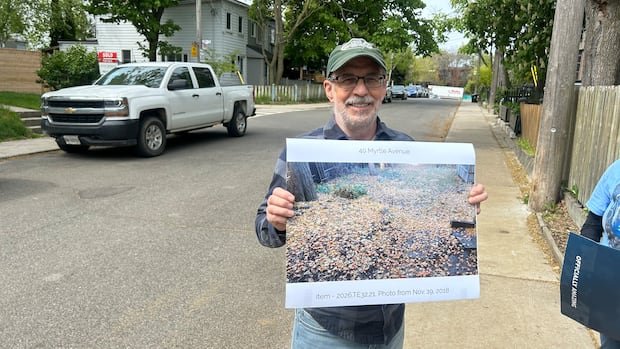

An increasingly prevalent non-native tree in Toronto is causing concerns among residents. Alan Page and his wife, who have resided in their Leslieville home for more than two decades, have been dealing with the inconvenience of their backyard ginkgo tree producing sticky and malodorous fruit every autumn. The residue from the fruit is challenging to remove and attracts flying insects like bees and wasps, creating a nuisance for the homeowners.
Despite the tree being in good health, residents have been seeking permission from city councillors to remove the ginkgo trees due to the offensive odor emitted by the fruit, often likened to a combination of dog feces and vomit. Alan Page applied to have the tree removed earlier this year, but his request was denied by city forestry staff. His appeal is scheduled to be reviewed by the Toronto and East York Community Council, with staff recommending against granting permission for removal.
Coun. Josh Matlow recently urged council to explore alternative solutions to assist homeowners troubled by the ginkgo trees and their unpleasant fruit, which falls to the ground annually in October. The city currently has around 11.5 million trees, with an estimated number of “thousands” being ginkgos. Arborist Marc Ambeau noted that these trees, originating from China, have matured over the years, leading to the current issue with the fruit production.
Homeowners are required to obtain a permit from the city to remove any tree with a diameter exceeding 30 cm, even on private property, to support the city’s goal of increasing tree canopy coverage to 40% by 2050. Violating this bylaw can result in fines of up to $100,000. Matlow’s motion aims to prompt staff to propose solutions by 2027, particularly concerning the ginkgo tree removal regulations.
One of the affected neighbors, James Chiu, has supported Page’s appeal, highlighting the challenges posed by the ginkgo fruit in his backyard, which attracts animals and creates unpleasant odors. If granted permission to remove the tree, Page has agreed to plant five new trees as per city staff recommendations. Arborist Ambeau advised homeowners to appreciate the benefits of the ginkgo trees, such as providing shade and shelter for wildlife, despite the inconveniences caused by the fruit’s smell during the fall season.