

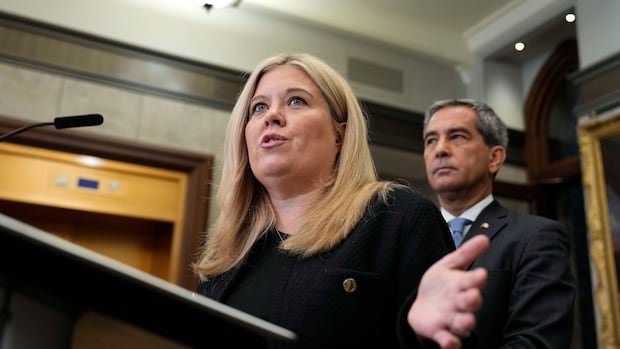

The Conservative party is advocating for reductions in the expenses associated with the Interim Federal Health Program (IFHP), which offers healthcare services to refugee and asylum seekers residing in Canada. The Liberals have also hinted at potential adjustments, as seen in the previous budget announcement that called for claimants to share some costs. However, the Conservatives are taking a more aggressive stance, proposing significant changes in both action and language.
Conservative Leader Pierre Poilievre recently took to social media to announce his party’s plan to present a motion regarding the IFHP in the House of Commons. Poilievre emphasized the need to cut down on what he referred to as “luxurious benefits” for individuals he labeled as “fake refugees.” The party’s motion seeks a comprehensive review of the program, suggesting that the federal government should only cover “emergency life-saving health care” for those whose claims are denied.
The Conservatives’ criticisms stem from a recent report by the Parliamentary Budget Officer revealing a substantial increase in the annual cost of the IFHP from 2021 to 2025, climbing from $226 million to $896 million due to a rise in asylum claimants. Without modifications, projections indicate that the program’s annual cost could escalate to $1.5 billion by 2030.
During a parliamentary debate, Liberal MP Yasir Naqvi condemned the Conservative Party’s rhetoric and motion, accusing them of attempting to sow division among Canadians using inflammatory tactics reminiscent of political discourse in the United States.
The Conservative motion was defeated in a subsequent parliamentary vote, with opposition from Liberal, Bloc Québécois, and NDP MPs. This scenario echoes a similar showdown over changes to the IFHP in the past, which resulted in a rebuke from the Federal Court.
In a previous instance in 2012, the Conservative government under Stephen Harper reduced the coverage under the IFHP, arguing against providing what they deemed as excessive healthcare to “illegal immigrants” and “bogus refugee claimants.” This move faced pushback from refugee advocates, medical professionals, and provincial governments, leading to legal challenges that culminated in a Federal Court ruling against the changes.
The Harper administration appealed the court’s decision, but the appeal was dropped after the Liberal government, led by Justin Trudeau, assumed office. Drawing from this historical context, the current debate underscores the importance of thoroughly assessing policy proposals for their real-world impact on vulnerable populations.
Before the recent Conservative motion, concerns had already surfaced regarding the Liberal government’s alterations to the IFHP. Critics argue that the adjustments, framed as co-payments, could limit access to essential services for refugees and asylum seekers, particularly those in need of mental health support.
The ongoing debate questions the necessity of revamping the IFHP, with considerations on the implications of restricting coverage for rejected claimants and the broader impact on Canada’s healthcare system. As the political discourse unfolds, the central focus remains on safeguarding the well-being and rights of individuals affected by these policy changes.