

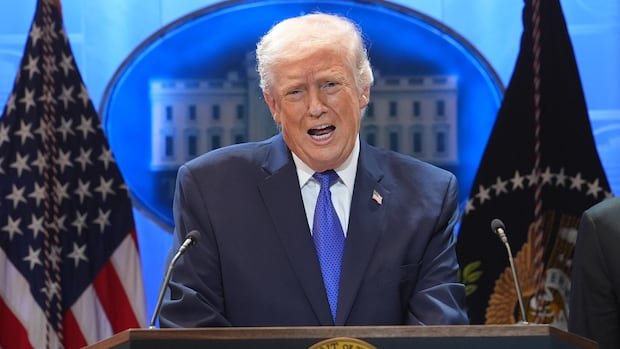

In a recent press conference addressing the Supreme Court’s decision on tariffs, U.S. President Donald Trump struggled to contain his frustration, hinting at a rough day in his second term. The ruling, with three conservative justices, including two of his appointees, voting against him in a 6-3 defeat, disallowed Trump from imposing tariffs through the International Emergency Economic Powers Act (IEEPA). Trump, undeterred, plans to utilize other legislative avenues to enforce tariffs, starting with a global 10% levy under a different law. Despite his claims of potential increased revenue, questions arise about why he didn’t opt for this alternative initially.
Examining the details of Trump’s new 10% temporary import duty unveils clues as to why it was a secondary option. The tariff, lasting 150 days, awaits Congressional extension and features exemptions for several goods, including Canadian exports complying with the Canada-U.S.-Mexico Agreement. Trump’s reaction to the ruling reflects his aversion to conceding defeat, reminiscent of his response to the 2020 election outcome, displaying a reluctance to pivot from his original strategy.
Former trade adviser Kelly Ann Shaw anticipates Trump’s effort to reconstruct his tariff program, emphasizing the President’s unwavering commitment to high tariffs as a strategy to bolster domestic production. Despite the setback, Trump remains resolute in his tariff-centric approach, aiming to forge ahead with his alternative tariff plans. This development leaves trading partners, including Canada, pondering the potential economic repercussions of Trump’s next policy moves.